

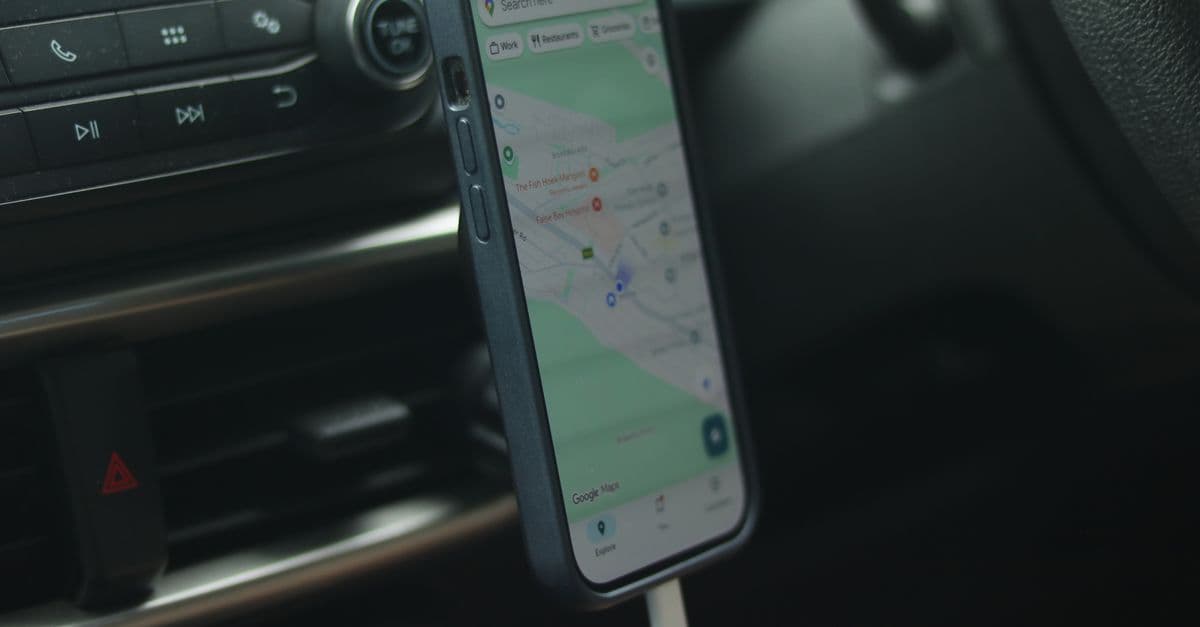
The local 3-pack is where high-intent customers make decisions. Here is exactly how contractors, from HVAC and plumbing to roofing and electrical, can rank higher on Google Maps and outrank competitors.
If you want to know how to rank higher on Google Maps, start with one uncomfortable truth: most contractors never make it into the top three, and the top three is where the calls happen. Once a searcher sees three plumbers with strong ratings and photos of real work, they rarely scroll further.
For contractors, Google Maps is not just another marketing channel. It is the primary source of high-intent leads. Someone searching "emergency plumber near me" at 11 PM is not browsing. They are buying.
Here is how to get your contracting business into that top three, step by step.
TL;DR: To rank higher on Google Maps, pick the most specific primary category for your trade, fill out every field in your Google Business Profile, build a steady stream of detailed reviews that mention your services and suburbs, keep your name, address, and phone number identical across the web, and support it all with location pages on your website. Proximity is the one factor you cannot control, so you win by dominating every factor you can.
Why Google Maps Matters More for Contractors
Contractors face unique challenges in local search:
- Service area businesses: You go to customers, not the other way around
- Emergency services: Immediate visibility means immediate revenue
- High transaction values: One job can be worth $5,000 to $50,000 or more
- Competitive markets: Every plumber in your city wants position one
The economics make it worth taking seriously. Say you are a roofing contractor with an average job value of $12,000 and you close one in five quotes. Even a handful of extra calls each month from a better local pack position adds up to serious annual revenue. That is the kind of maths that justifies a proper 90-day effort rather than a quick tidy-up of your listing.
There is a second reason Maps matters now: AI search. When someone asks ChatGPT or Gemini to recommend a roofer in their suburb, those tools lean heavily on the same signals that drive Maps rankings, especially your Google Business Profile, your reviews, and consistent business information across the web. Ranking work you do for Maps doubles as answer engine optimisation. Improve one and you improve the other.
The Google Maps Ranking Formula for Contractors
Google is unusually transparent about how local ranking works. Its documentation names three factors:
| Factor | What it means | Your control |
|---|---|---|
| Relevance | How well your profile matches what was searched | High |
| Distance | How close you are to the searcher | Limited |
| Prominence | How well known and well reviewed your business is | High |
Relevance comes from your categories, services, business description, and the content on your website. Prominence comes from reviews, citations, links, and general visibility online. Distance is largely out of your hands.
The strategy: Since you cannot move your business closer to every searcher, dominate the factors you can control. A profile that is more relevant and more prominent will regularly outrank a closer competitor with a thin listing.
GBP Optimisation for Contractors
Your Google Business Profile is the engine of your Maps visibility. Most contractor profiles are half finished. That is your opportunity.
Primary Category Selection
Your primary category is the single most influential field you control. Choose it deliberately:
| If you are a... | Best primary category |
|---|---|
| General plumber | Plumber |
| Drain specialist | Drain Cleaning Service |
| HVAC contractor | HVAC Contractor |
| Air conditioning specialist | Air Conditioning Contractor |
| General electrician | Electrician |
| Residential roofer | Roofing Contractor |
| Commercial roofer | Commercial Roofing Contractor |
Pro tip: If you specialise, use the specialised category. A profile categorised as "Air Conditioning Repair Service" will typically beat a generic "HVAC Contractor" profile for aircon repair searches, because it is more relevant to the query.
Secondary Categories
Add every relevant secondary category, up to nine additional:
Example for an HVAC contractor:
- Primary: HVAC Contractor
- Secondary: Air Conditioning Contractor, Heating Contractor, Furnace Repair Service, Air Duct Cleaning Service, Heat Pump Supplier
Do not add categories for services you do not actually offer. Irrelevant categories dilute your relevance and can attract the wrong enquiries.
Services Section
This is where most contractors fail. Complete your services section with:
- Every service you offer, and be comprehensive. If you offer twenty services, list twenty
- Service descriptions written in plain language with natural keywords
- Pricing where appropriate, even if it is "from" pricing
Example service listing:
Hot Water System Installation Professional installation of storage and continuous flow hot water systems. Same-day service available. Free quotes. Workmanship warranty on all installations.
Each service you list is another query your profile can match. A profile listing only "Plumbing" will struggle against one that lists blocked drains, hot water repairs, gas fitting, leak detection, and burst pipe repairs individually.
Business Description
Use all 750 characters. Lead with what you do and where you do it, mention your key services, and finish with what makes you different: response times, warranties, years in business. Do not stuff keywords. Write it the way you would explain your business to a neighbour.
Photos That Build Trust and Rankings
Profiles with plenty of recent, genuine photos consistently attract more engagement than sparse ones, and engagement feeds prominence.
Photo strategy:
- Before and after project photos, uploaded weekly
- Team photos, which build trust with wary homeowners
- Equipment and sign-written vehicles, which show professionalism
- Completed projects with context in the file name and caption
- Licences and certifications
Video is even better: Upload short clips of your team at work. Real footage of real jobs is hard for competitors to fake and easy for customers to trust.
Service Area Optimisation
As a service area business (SAB), your setup matters:
Should You Show Your Address?
| Situation | Show address? |
|---|---|
| Walk-in customers welcome | Yes |
| Home-based, no walk-ins | No, hide it |
| Commercial office, no walk-ins | Usually no |
Hiding your address: You can still rank for your service areas without showing your physical location. Many top-ranking contractors operate this way, and Google's guidelines actually require SABs without walk-in premises to hide their address.
Defining Service Areas
Google allows up to 20 service areas. Strategy:
- Start with your core area, where you win most of your work
- Add surrounding suburbs and towns you actively serve
- Do not overreach, because Google treats implausibly broad claims with suspicion
- Update seasonally if your coverage changes
Common mistake: Claiming every suburb within 100 kilometres. Service areas do not directly expand where you rank; proximity still applies. Focus them on where you genuinely do business.
Review Strategy for Contractors
Reviews are the heart of prominence, and they influence conversions even more than rankings. A homeowner comparing three profiles will almost always ring the one with more recent, more detailed reviews.
How Many Reviews Do You Need?
Forget universal benchmarks. The right target is set by your market. Search your main service and suburb, look at the top three profiles, and note their review counts and ratings. Your goal is to beat the third-placed competitor first, then work upward. In some regional markets that means 30 reviews. In inner Melbourne trades it can mean well over 100.
Getting Reviews in the Field
Your technicians are your review generation system:
Before leaving the job:
"Is there anything else I can help with today? ... Great! We're a family-owned business, and reviews really help us. Would you have a minute to leave us a quick Google review? I can text you the link right now."
Technician incentives (internal only, never for customers):
- A small bonus per review that mentions them by name
- A monthly award for most reviews generated
- Team rewards for hitting monthly targets
Never pay or incentivise customers for reviews. It breaches Google's policies and Australian Consumer Law, and the ACCC has pursued businesses over misleading review practices.
Review Content That Helps Rankings
Reviews mentioning specific services and suburbs help you rank for those terms:
Generic review (helps a little):
"Great service, would recommend!"
Detailed review (helps a lot):
"Called them for an emergency hot water repair at 10 PM in Brunswick. The technician arrived within the hour, diagnosed the problem quickly, and had it fixed by midnight. Fair pricing and professional service."
How to encourage this: When asking for reviews, prompt customers gently: "If you could mention the service we did and your suburb, it really helps other homeowners find us."
Responding to Reviews
Respond to every review, positive and negative. Responses signal an active, engaged business to Google and to prospective customers. For negative reviews, stay calm, acknowledge the issue, and take it offline. One graceful response to a bad review builds more trust than ten five-star ratings.
Website Optimisation for Maps
Your website supports your Maps ranking. Google cross-references your profile against your site to confirm relevance and legitimacy. Key elements:
Local Landing Pages
Create dedicated pages for:
- Each major service area (city or suburb)
- Each major service offering
- Combined service plus location pages for your highest-value combinations
Example structure:
- /plumbing-services-geelong/
- /plumbing-services-werribee/
- /hot-water-repairs-geelong/
Each page needs:
- Unique content, not just the suburb name swapped out
- Local keywords in the title, headers, and copy
- NAP information
- An embedded Google Map
- Testimonials from customers in that area
Schema Markup
Implement LocalBusiness schema markup with:
- Business name, address, phone
- Service area definitions
- Services offered
- Price ranges
- Opening hours
Structured data helps Google, and increasingly AI assistants, understand exactly what you do and where. It is one of the cheapest wins in local SEO.
Citation Building for Contractors
Citations are mentions of your business name, address, and phone number on other websites. They reinforce prominence and confirm your business details.
Must-Have Citations for Australian Contractors
| Platform | Priority |
|---|---|
| Google Business Profile | Critical |
| Apple Maps | High |
| High | |
| hipages | High for contractors |
| Yellow Pages Australia | High |
| True Local | Medium |
| Oneflare | Medium |
| Industry associations (Master Plumbers, Master Electricians, HIA, MBA) | Medium |
For a full walkthrough, see our local citations guide for service businesses.
Consistency Is Key
Your NAP (Name, Address, Phone) must be identical everywhere:
Bad:
- "ABC Plumbing" vs "ABC Plumbing Pty Ltd" vs "ABC Plumbing Group"
- "123 Main St" vs "123 Main Street" vs "123 Main St."
Use the exact same format everywhere, including abbreviations, unit numbers, and phone formatting. Inconsistent details make Google less confident in your data, and less confident means less visible.
Advanced Tactics
The Proximity Play
Since distance matters, consider:
- Multiple legitimate locations: If you have real, staffed offices or depots in different areas, each can support its own profile. Never create fake locations; Google suspends profiles for this
- Suburb-specific landing pages: Rank in organic results for areas where Maps proximity works against you
- Targeted service areas: Focus your listed service areas on your highest-value suburbs
Competitive Intelligence
Study the profiles currently in the top three for your money keywords:
- How many reviews do they have, and how recent are they?
- What primary and secondary categories are they using?
- What keywords appear repeatedly in their reviews?
- How often do they post and upload photos?
You can check a competitor's categories by viewing their profile's page source or using local SEO tools such as BrightLocal or Whitespark. Whatever they are doing well, do it better and more consistently.
Google Posts and Q&A
Post weekly with offers, project showcases, seasonal reminders, and team updates. Posts keep your profile active, and activity supports engagement.
Also seed your profile's Q&A section with the questions customers actually ask: "Do you charge a call-out fee?", "Are you licensed and insured?", "Do you service my suburb?". Answer them clearly. These answers are exactly the kind of content AI assistants quote when recommending local businesses.
Common Mistakes Contractors Make
- Wrong primary category: "Construction Company" instead of your specific trade
- Incomplete services: Listing two or three services when you offer twenty
- No photos: Or worse, stock photos instead of real work
- Ignoring reviews: Not asking, and not responding
- NAP inconsistencies: Different details scattered across the web
- No website support: Relying on the profile alone with no location pages behind it
- Keyword stuffing the business name: "Best Plumber Melbourne VIC Plumbing" invites suspension
The 90-Day Maps Ranking Plan
Month 1: Foundation
- Complete every field of your Google Business Profile
- Upload 30 or more genuine project photos
- Correct your NAP on your top 20 citations
- Implement a review request system your techs actually use
Month 2: Building
- Launch five location pages on your website
- Generate a steady flow of new reviews
- Add weekly Google Posts
- Build ten new quality citations
Month 3: Acceleration
- Keep the review engine running
- Upload new project photos weekly
- Pursue local link opportunities: sponsorships, suppliers, associations
- Measure rankings across your service area and adjust
Most contractors who follow this consistently see measurable movement within 60 to 90 days. The ones who win long term are the ones who keep going after month three, because Maps rankings reward sustained activity, not one-off cleanups. For the broader strategy beyond Maps, see our guide to local pack ranking strategies and our SEO services for contractors.
FAQ
How long does it take to rank higher on Google Maps?
With consistent work on your profile, reviews, and citations, most contractors see movement within 60 to 90 days. Competitive metro markets take longer than regional ones, and businesses starting from a neglected profile often see the fastest early gains.
Why is my business not showing up on Google Maps at all?
The usual culprits are an unverified profile, a suspended profile (often from keyword stuffing the business name or address issues), or searching from outside your effective proximity radius. Verify your profile, check for suspension notices in your dashboard, and confirm your primary category matches what you searched.
Do service area businesses rank worse than businesses with a storefront?
No. Hiding your address does not penalise you. Plenty of top-ranking trades operate as service area businesses. What matters is a complete profile, strong reviews, consistent citations, and a website that confirms your service areas.
Does having more reviews than competitors guarantee the top spot?
No single factor guarantees anything. Reviews are a major prominence signal, but Google balances them against relevance and distance. A closer competitor with a better-optimised profile can outrank you. That is why the plan above works every controllable factor at once.
Do Google Maps rankings affect AI search recommendations?
Increasingly, yes. AI assistants such as ChatGPT and Gemini draw on business profiles, reviews, and consistent web data when recommending local businesses. Strong Maps signals make you more likely to be cited. See our answer engine optimisation glossary entry for how this works.
Want to know exactly where you stand in Google Maps? Our free audit includes a competitive analysis showing your rankings against your top local competitors.
Get Your Free Maps Ranking Analysis →