

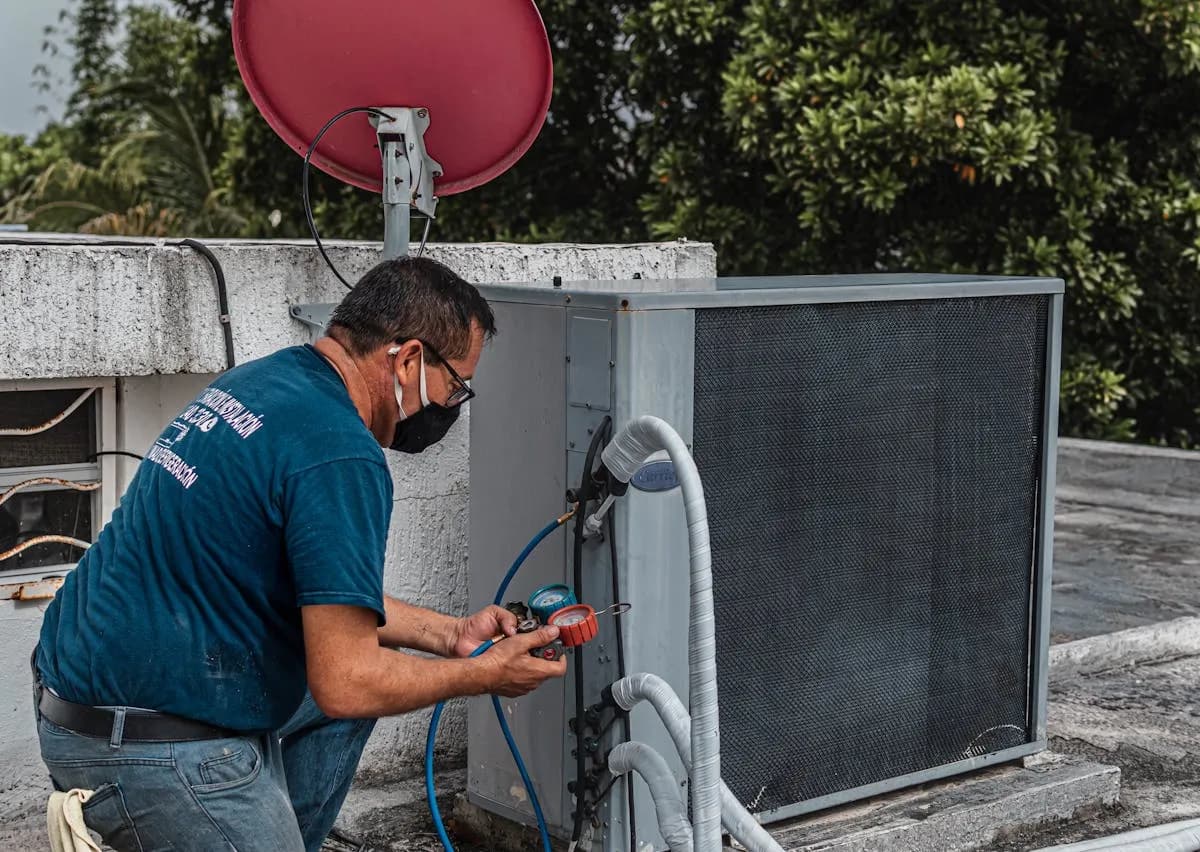
Proven strategies to generate more HVAC leads online -- from website conversion tactics and Google Ads to maintenance plan funnels and neighborhood targeting. Real numbers, real results.
You have technicians ready to work. You have trucks on the road. You have the skills to install a 5-ton Carrier system blindfolded. But your phone is not ringing enough.
That is the frustration every HVAC business owner knows. You can be the best contractor in your market, but if homeowners cannot find you online -- or if they find you and leave without calling -- none of that matters.
The HVAC companies consistently booking 20-40+ jobs per week from their website are not doing one magic thing. They are running a system: a combination of website optimization, paid advertising, organic search, and reputation management that works together to generate a predictable flow of leads in every season.
This guide breaks down every piece of that system with real numbers, so you can build your own lead generation engine. It is the companion to our HVAC web design and SEO service, which implements everything below for contractors who want it done for them.
The HVAC Lead Generation Landscape in 2026
Before diving into tactics, let us look at what lead generation actually costs across different channels. These numbers are based on real data from HVAC companies across the US:
| Lead Source | Cost Per Lead | Lead Quality | Close Rate | Cost Per Booked Job | Speed to Results |
|---|---|---|---|---|---|
| Google Local Service Ads | $25-$60 | Very High | 25-35% | $85-$200 | 1-2 weeks |
| Google Search Ads (PPC) | $80-$200 | High | 15-25% | $350-$900 | Immediate |
| Organic Search (SEO) | $15-$40 | Very High | 30-40% | $40-$120 | 3-6 months |
| Google Maps (GBP) | $10-$30 | Very High | 30-40% | $30-$90 | 2-4 months |
| Facebook/Instagram Ads | $30-$80 | Low-Medium | 8-15% | $250-$700 | 1-2 weeks |
| HomeAdvisor/Angi | $50-$150 | Medium | 10-20% | $300-$1,000 | Immediate |
| Thumbtack | $30-$100 | Medium | 10-18% | $200-$700 | Immediate |
| Yelp Ads | $40-$90 | Medium-High | 15-25% | $200-$500 | 1-2 weeks |
| Nextdoor | $15-$40 | Medium-High | 15-25% | $80-$220 | 2-4 weeks |
| Direct Mail | $20-$50 | Medium | 5-10% | $250-$700 | 2-4 weeks |
| Referral Programs | $0-$50 | Very High | 40-60% | $0-$100 | Ongoing |
Two channels dominate for HVAC: organic search (SEO + Google Maps) and Google Local Service Ads. Organic has the lowest cost per booked job and compounds over time. LSAs deliver the fastest results with the best lead quality from paid channels.
For a deeper comparison of Google Ads vs Local Service Ads, see our detailed breakdown.
Step 1: Fix Your Website Conversion Rate First
Here is a mistake almost every HVAC company makes: they spend money driving traffic to a website that does not convert. That is like pouring water into a bucket with holes in the bottom.
Before you spend a dollar on ads or SEO, fix your website.
The HVAC Website Conversion Benchmarks
| Metric | Poor | Average | Good | Excellent |
|---|---|---|---|---|
| Overall conversion rate | Below 2% | 2-4% | 4-7% | 7-12% |
| Mobile conversion rate | Below 1.5% | 1.5-3% | 3-5% | 5-10% |
| Emergency page conversion | Below 5% | 5-8% | 8-12% | 12-20% |
| Installation page conversion | Below 1% | 1-2% | 2-4% | 4-8% |
| Bounce rate | Above 70% | 55-70% | 40-55% | Below 40% |
| Average time on site | Under 30s | 30-60s | 1-2 min | Over 2 min |
If your website converts below 3%, every dollar you spend on traffic is being wasted. Doubling your conversion rate from 2% to 4% has the same impact as doubling your traffic budget -- and it costs a fraction of the price.
The 7 Conversion Elements Every HVAC Website Needs
1. Click-to-call on every page. 62% of HVAC leads come through phone calls, not forms. Your phone number needs to be visible without scrolling on every single page, and it needs to be a tap-to-call link on mobile.
2. Emergency CTA that stands out. A red or orange "EMERGENCY REPAIR - CALL NOW" button with your response time guarantee. This should be in your header, sticky on mobile, and on every service page.
3. Scheduling that works instantly. Whether you use ServiceTitan, Housecall Pro, or a simple calendar widget, homeowners should be able to book an appointment in under 60 seconds. Every additional step you add loses 10-15% of potential bookings.
4. Social proof above the fold. Your Google rating, review count, and 2-3 snippet testimonials should be visible before anyone scrolls. "4.9 stars from 287 Google reviews" converts better than any sales copy you could write.
5. Financing prominently displayed. 67% of HVAC system purchases are financed. If your financing options are buried on a sub-page, you are losing installation leads. Feature monthly payment amounts on your homepage and every installation page: "$89/month for a new AC system."
6. Clear service area. Homeowners want to know you service their neighborhood. List your service cities on your homepage. Better yet, include a map showing your coverage area.
7. Trust badges and certifications. EPA certification, NATE certification, BBB accreditation, manufacturer certifications (Carrier, Trane, Lennox dealer badges), and your license number. These are not vanity -- they directly impact conversion rates.
If you are not sure where your website stands, run it through our free website audit to get a detailed conversion and technical analysis.
For more detail on what a high-converting HVAC website should include, our HVAC website cost guide breaks down the features and what each one costs.
Step 2: Master Google Local Service Ads
Local Service Ads (LSAs) are the single fastest way to generate HVAC leads in 2026. They appear at the very top of Google search results -- above regular Google Ads, above organic results, above everything.
Why LSAs Work So Well for HVAC
- Pay per lead, not per click. You only pay when someone actually contacts you. No wasted spend on tire-kickers.
- Google Guaranteed badge. The green checkmark badge builds instant trust. 78% of consumers say it influences their hiring decision.
- Top placement. LSAs occupy the most valuable real estate in Google search results.
- Dispute invalid leads. If someone calls about a service you do not offer or is outside your area, you can dispute the charge and get a credit.
LSA Optimization for HVAC
Set your budget based on capacity. If your techs can handle 5 additional jobs per day and your average LSA cost per lead is $45, set your weekly budget at $225/day ($1,575/week). Adjust up or down based on lead quality and close rate.
Respond within 5 minutes. LSA rankings are heavily influenced by your response time. HVAC companies that answer within 5 minutes get 3x more leads than those taking 30+ minutes. If you cannot answer immediately, use an answering service during peak hours.
Maximize your reviews. LSA rankings are also driven by review count and rating. The HVAC companies dominating LSAs typically have 150+ reviews with a 4.8+ average. This is not optional -- it is the cost of entry.
Select the right service categories. Do not just check every box. Focus on your highest-margin services:
- Air Conditioning Repair
- Air Conditioning Installation
- Furnace Repair
- Furnace Installation
- HVAC Maintenance
- Duct Cleaning
Set your service area precisely. Too broad and you pay for leads you cannot serve efficiently. Too narrow and you miss opportunities. Start with a 20-30 mile radius from your shop and adjust based on profitability.
Step 3: Build Seasonal Campaigns That Match Demand
HVAC demand is not flat. It spikes and dips dramatically by season. Your marketing should match:
Summer Campaign (May-September)
Theme: Emergency AC repair and system replacement
Tactics:
- Increase LSA budget by 50-100% in June-August
- Run Google Ads targeting "ac repair" and "ac not working" keywords
- Launch Facebook retargeting ads to website visitors with AC repair messaging
- Email your maintenance plan customers about AC tune-ups in May
- Create urgency with "Same-Day AC Repair" and "Beat the Heat" messaging
Budget allocation: 40% of annual marketing budget
Expected results: 40-60% of annual leads should come during this period
Fall Shoulder Season (October-November)
Theme: Heating preparation and maintenance plans
Tactics:
- Shift messaging to furnace tune-ups and winterization
- Offer "Winter Prep Package" bundles at a discount
- Push maintenance plan signups with "Lock in your rate before winter" messaging
- Send email campaigns to past AC customers about heating services
- Reduce LSA budget to maintenance levels
Budget allocation: 15% of annual marketing budget
Winter Campaign (December-February)
Theme: Emergency heating repair and system replacement
Tactics:
- Increase LSA and Google Ads budget for heating keywords
- Feature "Emergency Heating Repair" prominently on your website
- Run social media ads with cold-weather imagery and urgency messaging
- Offer financing promotions on new heating systems
- Email maintenance plan customers reminders about heating coverage
Budget allocation: 30% of annual marketing budget
Spring Shoulder Season (March-April)
Theme: AC tune-ups and early cooling preparation
Tactics:
- Launch "Spring AC Tune-Up Special" campaigns
- Send email to entire customer list about pre-season maintenance
- Run awareness campaigns about AC system lifespan and replacement
- Begin SEO content push for summer keywords (content takes 2-3 months to rank)
- Ramp up review generation to build review count before summer peak
Budget allocation: 15% of annual marketing budget
Step 4: Turn Maintenance Plans into a Lead Machine
Here is what separates the HVAC companies doing $5 million from the ones stuck at $1 million: recurring maintenance plan revenue.
Maintenance plans are not just about the $15-$25/month subscription fee. They are a lead generation flywheel:
The Maintenance Plan Flywheel
- Customer signs up for a $199/year maintenance plan (2 visits per year)
- Tech performs tune-up and identifies a failing capacitor, low refrigerant, or aging equipment
- Customer approves repair or begins considering a system replacement (average repair: $350, average replacement: $8,000-$12,000)
- Happy customer leaves a review and refers neighbors
- Customer renews and the cycle repeats
The average HVAC maintenance plan customer spends 3.2x more per year than a non-plan customer. And plan customers have a 78% retention rate year over year, compared to a 20-30% rebooking rate for one-time service customers.
How to Sell Maintenance Plans Online
Dedicated landing page. Create a page that explains your plan tiers, benefits, and pricing. Include a comparison table:
| Feature | No Plan | Basic Plan ($149/yr) | Premium Plan ($249/yr) |
|---|---|---|---|
| Spring AC Tune-Up | $129 | Included | Included |
| Fall Heating Tune-Up | $129 | Included | Included |
| Priority Emergency Service | No | Same-day | 2-hour response |
| Repair Discount | 0% | 10% off | 20% off |
| New System Discount | 0% | 5% off | 10% off |
| Parts Warranty Extension | Standard | +1 year | +2 years |
| No After-Hours Fee | No | No | Yes |
| Annual Cost | $258+ (tune-ups only) | $149 | $249 |
Online signup with recurring billing. Make it possible to sign up and pay directly from your website. Do not force a phone call for a $149/year purchase. Integrate Stripe or your field service software's billing module.
Promote on every service page. After any service or repair page, include a CTA: "Prevent future breakdowns. Join our maintenance plan and save 10-20% on all repairs."
Post-service email sequence. After every completed job, send a 3-email sequence promoting your maintenance plan. Email 1 (day 1): Thank you + review request. Email 2 (day 3): "Protect your investment" maintenance plan pitch. Email 3 (day 7): Limited-time discount on annual plan signup.
Step 5: Dominate Organic Search
Paid ads generate leads today. SEO generates leads forever. We cover the full HVAC SEO strategy in our HVAC SEO guide, but here are the lead generation essentials:
Target High-Intent Keywords
Focus your SEO effort on keywords where the searcher is ready to hire:
- "[service] near me" (ac repair near me, furnace repair near me)
- "[service] in [city]" (ac installation in Dallas)
- "emergency [service]" (emergency heating repair)
- "[service] cost" (ac repair cost, furnace replacement cost)
These generate leads directly. Informational keywords ("how does a heat pump work") build authority but convert at much lower rates.
Build Service Area Pages
Each city or major neighborhood you serve needs its own page. The content must be unique to that location -- not just your standard service page with the city name swapped in. Mention local landmarks, housing characteristics, common HVAC issues for that area, and local customer testimonials.
A 15-city service area page strategy can generate 30-50 additional organic leads per month within 6-12 months of implementation.
Invest in Your Google Business Profile
For HVAC companies, your Google Business Profile drives more leads than your website in many markets. Optimize it aggressively: complete every field, post weekly, upload photos consistently, and generate reviews systematically. The Map Pack is where most HVAC leads originate.
Step 6: Reputation Marketing (Not Just Management)
Most HVAC companies think about reviews as "reputation management" -- responding to bad reviews and hoping for good ones. The companies generating the most leads think about it as "reputation marketing" -- actively using their review profile as a lead generation tool.
The Review-to-Revenue Pipeline
| Review Count | Perceived Trust | Impact on Conversion Rate |
|---|---|---|
| 0-10 reviews | Low | Baseline (1-2%) |
| 11-50 reviews | Growing | +15-25% |
| 51-100 reviews | Established | +30-50% |
| 101-250 reviews | Strong | +50-80% |
| 250+ reviews | Dominant | +80-120% |
An HVAC company with 300 reviews at a 4.9 rating will convert website visitors at roughly double the rate of a competitor with 30 reviews at 4.5 stars. Same website design. Same services. Same prices. The reviews alone double the conversion.
The 5-Star Review System
-
Automate the ask. Use your field service software (ServiceTitan, Housecall Pro) to automatically text a review request within 2 hours of job completion. No manual effort from your team required.
-
Make it frictionless. Send a direct link to your Google review page. Not a link to your website. Not a link to a review platform. One tap, and they are writing a review.
-
Coach your technicians. The tech's in-person mention dramatically increases review rates. Train them to say: "If you are happy with the work, a Google review would really help our team out. You should get a text with the link in about an hour."
-
Respond to every single review. Positive reviews get a personalized thank-you mentioning the specific service. Negative reviews get a professional, empathetic response with a direct phone number to resolve the issue. This response pattern matters for both SEO and for future prospects reading your reviews.
-
Feature reviews everywhere. Embed your best reviews on your homepage, service pages, and landing pages. Share 5-star reviews on social media weekly. Include review screenshots in your email marketing. Use review snippets in your Google Ads copy.
For the complete review strategy, see our guide to getting more Google reviews for service businesses.
Step 7: Neighborhood Targeting
Here is an advanced strategy most HVAC companies have never considered: hyper-local neighborhood targeting.
Instead of marketing to your entire service area, focus intense campaigns on specific neighborhoods where you have the highest density of existing customers, where homes are a certain age (older homes need more HVAC work), or where competitor coverage is thin.
How Neighborhood Targeting Works
Step 1: Identify target neighborhoods. Pull your customer data and map it. Look for clusters. Neighborhoods where you have already completed 20+ jobs are perfect targets because you have built-in social proof and referral potential.
Step 2: Create neighborhood-specific content. Write service area pages and blog content specific to that neighborhood. Reference local schools, parks, and landmarks. Mention common HVAC issues in that neighborhood's housing stock.
Step 3: Run hyper-local Google Ads. Set a 3-5 mile radius around the target neighborhood. Use neighborhood-specific ad copy: "Trusted by 47 homeowners in Arcadia. AC repair with same-day service."
Step 4: Door hangers and direct mail. After completing a job in the neighborhood, leave door hangers on the 20-30 nearest homes: "We just serviced your neighbor's AC system. Special offer for [Neighborhood] residents: $79 AC Tune-Up (Reg. $149)."
Step 5: Nextdoor marketing. Claim your business on Nextdoor and engage in local conversations. When someone in your target neighborhood asks "Anyone know a good AC company?", your existing customers will recommend you -- and you can respond directly.
Neighborhood Targeting Results
One HVAC client in Scottsdale focused their marketing on 5 specific neighborhoods instead of the entire metro area. Results after 6 months:
- Lead volume from target neighborhoods: Up 180%
- Cost per lead: Down 35% (from $85 to $55)
- Close rate: Up from 28% to 41% (familiarity and neighbor referrals)
- Average job value: Up 22% (older homes = bigger system needs)
- Customer acquisition cost: Down 48%
The key insight: marketing to everyone in a 30-mile radius is expensive and inefficient. Marketing intensely to 5 neighborhoods where you already have a presence and reputation is cheaper and more effective.
Step 8: Google Ads for HVAC (When Done Right)
Google Ads for HVAC is either wildly profitable or a complete money pit. The difference comes down to campaign structure and keyword targeting.
The HVAC Google Ads Structure That Works
Campaign 1: Emergency Services (highest priority)
- Keywords: "ac repair near me," "emergency ac repair," "furnace not working"
- Budget: 40% of ad spend
- Bid strategy: Maximize conversions
- Ad scheduling: 24/7 during peak season
- Landing page: Dedicated emergency service page with prominent phone number
Campaign 2: Installation/Replacement
- Keywords: "ac installation cost," "new furnace cost," "hvac replacement"
- Budget: 30% of ad spend
- Bid strategy: Target CPA
- Ad scheduling: Business hours (these leads need consultations, not emergency service)
- Landing page: Installation page with financing calculator
Campaign 3: Maintenance/Tune-Ups
- Keywords: "ac tune up near me," "furnace maintenance"
- Budget: 15% of ad spend
- Bid strategy: Target CPA
- Ad scheduling: Business hours
- Landing page: Maintenance page with plan signup option
Campaign 4: Brand Protection
- Keywords: Your company name and variations
- Budget: 5% of ad spend
- Bid strategy: Manual CPC
- Purpose: Prevent competitors from stealing your brand searches
Campaign 5: Competitor Targeting
- Keywords: Competitor company names
- Budget: 10% of ad spend
- Bid strategy: Manual CPC
- Ad copy: Focus on your differentiators (faster response, better reviews, financing)
Critical Google Ads Mistakes HVAC Companies Make
Sending all traffic to the homepage. Emergency repair clicks should go to an emergency repair page. Installation clicks should go to an installation page. Your homepage is the worst possible landing page for paid traffic.
Not using call-only ads. For emergency HVAC keywords, call-only ads (which dial your number directly) convert at 2-3x the rate of standard text ads.
Broad match keywords. Bidding on "air conditioning" in broad match will spend your budget on people searching for "air conditioning history" and "air conditioning unit parts." Use phrase match and exact match only.
No negative keywords. Add negatives for: DIY, parts, how to, jobs, salary, training, wholesale, used. These prevent your ads from showing for searchers who will never hire you.
Ignoring ad scheduling. If you do not take calls after 9 PM, do not run ads after 9 PM. You are paying for clicks from people who will call a competitor because you did not answer.
Step 9: Email Marketing for Repeat Business
Your existing customer list is your most undervalued asset. These people already trust you. They already have your equipment in their home. Turning a one-time customer into a repeat customer costs 5-7x less than acquiring a new one.
The HVAC Email Calendar
| Month | Email Theme | Offer | Goal |
|---|---|---|---|
| January | Winter heating tips | Free furnace inspection with repair | Drive heating repairs |
| February | Energy savings guide | Programmable thermostat offer | Upsell |
| March | Spring prep reminder | Early bird AC tune-up discount | Book tune-ups |
| April | AC tune-up push | $79 tune-up (reg $149) | Fill spring schedule |
| May | Summer prep urgency | Maintenance plan signup bonus | Plan signups |
| June | Beat the heat | Same-day AC repair availability | Emergency awareness |
| July | Energy bill reduction | Free energy audit | System replacement leads |
| August | Back to school comfort | IAQ assessment offer | Cross-sell IAQ |
| September | Fall transition | Heating system checkup | Book fall tune-ups |
| October | Winter is coming | Furnace tune-up special | Fill fall schedule |
| November | Holiday comfort | Maintenance plan gift cards | Plan signups + referrals |
| December | Year-end deals | Financing specials on new systems | Installation leads |
Target metrics:
- Open rate: 25-35% (HVAC emails perform well because they are relevant and timely)
- Click rate: 3-5%
- Revenue per email: $0.50-$2.00 per recipient
- List size: Build toward 2,000+ contacts
A 3,000-person email list generating $1.50 per recipient per email, sent twice monthly, produces $9,000/month in attributable revenue. That is $108,000/year from a channel that costs essentially nothing to operate.
Putting It All Together: The HVAC Lead Generation Stack
Here is how to allocate a $5,000/month marketing budget for maximum lead generation:
| Channel | Monthly Budget | Expected Leads | Cost Per Lead | Expected Revenue |
|---|---|---|---|---|
| Website + SEO | $1,500 | 20-30 | $50-$75 | $16,000-$24,000 |
| Google LSAs | $1,500 | 25-40 | $38-$60 | $20,000-$32,000 |
| Google Ads | $1,200 | 8-15 | $80-$150 | $6,400-$12,000 |
| Review Management | $300 | Indirect | -- | Increases all channels |
| Email Marketing | $200 | 5-10 | $20-$40 | $4,000-$8,000 |
| Social Media | $300 | 3-5 | $60-$100 | $2,400-$4,000 |
| Total | $5,000 | 61-100 | $50-$82 avg | $48,800-$80,000 |
At the conservative end, a $5,000/month investment generates $48,800/month in revenue. That is a 9.76x return. At the optimistic end, it is 16x.
The key is that these channels reinforce each other. SEO drives organic traffic. Reviews increase conversion across all channels. Email marketing reactivates past customers. LSAs and Google Ads fill gaps during slow periods. The whole system performs better than any single channel.
What to Do Next
If you are an HVAC business owner reading this, here is your action plan in priority order:
-
Audit your website. If it is not converting at 3%+ on mobile, fix it before spending on ads. Our website audit tool gives you a free analysis of what needs fixing.
-
Claim and optimize your Google Business Profile. This is free and generates leads within weeks.
-
Set up Google Local Service Ads. This is the fastest path to paid leads with the best cost-per-lead in the industry.
-
Build a review generation system. This amplifies every other channel.
-
Invest in SEO for long-term dominance. Start with service pages and service area pages. Our HVAC SEO guide has the full roadmap.
-
Launch seasonal campaigns. Match your marketing intensity to customer demand cycles.
-
Build maintenance plan infrastructure. This is the recurring revenue engine that funds everything else.
You do not need to do everything at once. Start with steps 1-3 and you will see results within 30-60 days. Then build from there.
If you want a partner to build and execute this system for you, our HVAC web design and lead generation program combines everything in this guide into a done-for-you package. We handle the website, the SEO, the conversion optimization, and the ongoing strategy -- so you can focus on what you do best: keeping homes comfortable.