

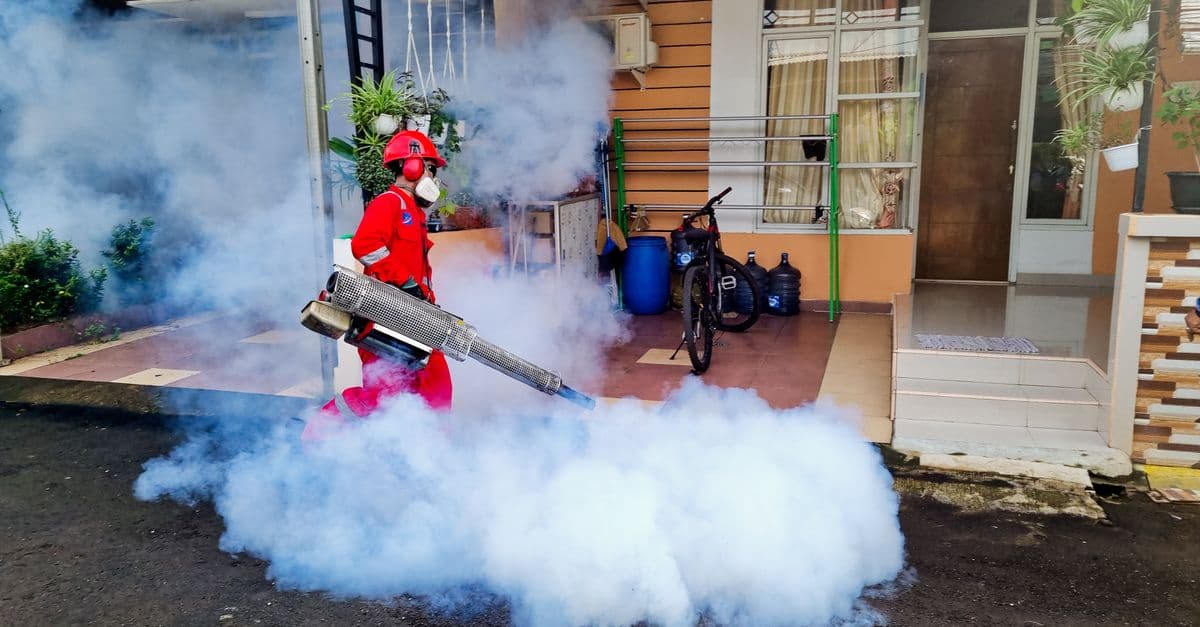
Pest control SEO is how Australian operators escape the termite-season rollercoaster. Emergency vs planned search intent, suburb pages, seasonal content cycles, reviews, and getting recommended by AI.
Every pest control operator knows the pattern. Spring hits, the phone rings off the hook with termite panic, and by mid-winter you are quoting rodent jobs just to keep the vans moving. The feast-and-famine cycle is not a fact of life. It is a marketing problem, and pest control SEO is the fix.
Pest control demand never actually stops. It just changes shape through the year: termites in spring, spiders and wasps through summer, cockroaches in the warm months, rodents when it gets cold. The operators who dominate their local market are the ones whose website catches every one of those waves, not just the termite spike. This guide covers how to build that machine: splitting emergency from planned search intent, structuring suburb and service pages properly, running your Google Business Profile and reviews, publishing seasonal content on the pest calendar, and the newest layer, getting your business named when customers ask ChatGPT or Google's AI to find a pest controller.
It is the same playbook we run for pest control businesses at Orkkid. If you want to know where you stand before you start, grab a free AI citation audit and we will show you who Google and the AI engines currently recommend in your area.
TL;DR
- Pest control searches split into two intents: emergency ("wasp nest removal now") and planned ("termite inspection cost"). Each needs different pages, and mixing them on one page loses both.
- Termite work deserves its own section of your website, separate from general pest control, because termite searchers have bigger budgets and different questions.
- Suburb pages with genuinely local pest context let you rank across your whole service area, not just your home base.
- Your Google Business Profile and review volume decide most map pack rankings, and the map pack takes most emergency calls.
- A seasonal content calendar built around Australian pest cycles (termites in spring, spiders and wasps in summer, rodents in winter) keeps leads coming outside termite season.
- AI tools like ChatGPT now recommend specific pest control businesses by name, and almost no operators have optimised for it yet.
Why pest control SEO is a two-intent game
Most trades have one dominant search intent. Pest control has two, and they behave completely differently.
Emergency intent. A customer finds a wasp nest above the back door, a redback in the kids' bedroom, or a rat in the kitchen. They search "wasp nest removal [suburb]" on their phone and call whoever looks credible and available first. These searches are won in the map pack, through your Google Business Profile, reviews, and a page that makes calling effortless.
Planned intent. A homeowner is buying a property and needs a pre-purchase timber pest inspection. Or they have seen mud tubes on a fence post and are researching termite treatment options. These customers compare, read, and take days or weeks to decide. They are won with depth: detailed service pages, honest cost guides, and proof you know what you are doing.
The mistake most pest control websites make is serving both intents with one generic "Our Services" page. The emergency searcher cannot find the phone number fast enough, and the termite researcher cannot find enough substance to trust you. Build for each intent separately and you beat competitors at both.
Split termites from general pest control
Termite work is not just another line on your services list. In most of Australia it is the highest-value work you do, the searches behind it are specific, and the customer mindset is nothing like a cockroach spray booking. Your site structure should reflect that.
Give termites their own hub with dedicated pages for each service:
- Termite inspections. Target "termite inspection [city]" and "pre-purchase timber pest inspection". Explain what an inspection covers, how long it takes, what the report includes, and what happens if you find activity.
- Termite treatment. Cover the treatment types you actually offer, chemical soil treatments, baiting systems, and when each is the right call. Honest comparison content here builds enormous trust.
- Termite barriers and prevention. New builds and renovations need barrier systems, and "termite barrier cost" searchers are budgeting real money.
Then build your general pest pages separately: cockroaches, ants, spiders, rodents, wasps and bees, fleas, bird control if you do it. One page per pest type, because Google ranks pages, not businesses, and "cockroach treatment [suburb]" deserves a page that talks only about cockroaches.
This split also protects your rankings. A single page trying to rank for "termite inspection", "wasp removal", and "rodent control" simultaneously ranks for none of them well.
Be the pest control business AI recommends
Suburb pages: rank everywhere your vans go
Google leans heavily on proximity for local rankings, which means your website naturally ranks near your office and fades everywhere else. Suburb pages fix that. Build a dedicated page for each suburb or region you want more work from, and make each one genuinely about that place:
- The pests you actually see there. Older suburbs with established gardens and timber homes have different termite and rodent pressure than new estates on cleared land. Coastal suburbs get different spider and ant profiles than inland ones. If you have serviced the area, you know this, so write it down.
- Real jobs you have done in the suburb, described plainly. No client names needed, just the situation and the fix.
- Reviews from customers in that suburb, quoted on the page.
- Whether the suburb is in your same-day response zone for emergencies.
Start with the suburbs where you already have job history and reviews, then expand outward. Ten genuinely local pages beat fifty templated ones, because Google filters near-duplicate suburb pages and customers can smell them anyway.
Google Business Profile: where emergency calls are won
For "pest control near me" and every urgent pest search, the map pack sits above the organic results, and on mobile many customers never scroll past it. Your Google Business Profile decides whether you are in it.
The pest-control-specific settings that matter most:
- Primary category: "Pest control service". Secondary categories where they genuinely apply, such as "Bird control service".
- Services: list every pest and service separately. Termite inspections, termite treatment, cockroach control, spider treatment, wasp nest removal, rodent control, end-of-lease flea treatment. Each listed service is another search you can match.
- Service area: the suburbs you actually cover, not the entire state.
- Photos: real ones. Treatment in progress, your ute, thermal imaging gear, a technician in uniform. A few every week beats a bulk upload once a year.
- Posts: weekly, and seasonal. "Termite swarming season has started, book your inspection" in early spring is a free ad inside your listing at exactly the right moment.
We cover the full setup in our Google Business Profile optimisation guide, so I will not repeat the basics here. The pest control takeaway: your profile is the landing page for your most urgent, highest-converting traffic. Treat it like one.
And keep your name, address, and phone number identical across your website, your profile, and every directory. Our local citations guide explains why mismatches quietly cost you rankings.
Reviews: proof for a trust-heavy purchase
Letting a stranger spray chemicals through your house, or trusting their verdict on whether your biggest asset has termites, takes more trust than most trade jobs. Reviews carry that weight.
The system is simple and it works:
- Ask at the moment of relief, when the nest is gone or the inspection report is delivered. Then send an SMS with a direct link to your Google review page. Texts get actioned, emails get buried.
- Ask after every job, not just termite jobs. A steady weekly trickle of reviews signals an active, healthy business to both Google and customers.
- Let customers mention the pest and the suburb. "Sorted our German cockroach problem in two visits" is local relevance written in the exact language future customers search with.
- Reply to everything. Calm and specific on the negatives, short and human on the positives.
- Never buy or incentivise reviews. The suspension risk alone outweighs any shortcut.
→ Not sure where you stand? Our free AI SEO audit for pest control tests the questions your customers ask and shows you the answer. Run my free audit.
The seasonal content calendar: your off-season lead machine
This is where pest control SEO gets genuinely unfair to competitors who ignore it. Pest demand in Australia runs on a predictable calendar, and it varies by region. Publish content ahead of each cycle and your pages are ranked and waiting when the searches spike.
A rough national shape, which you should adjust to your region:
| Season | Pest pressure | Content to publish the season before |
|---|---|---|
| Spring | Termite swarming (alates), ants return, bees and wasps start nesting | Termite swarming explainers, "flying ants vs termites", inspection booking pushes |
| Summer | Spiders, wasps, cockroaches, mosquitoes at their peak | Spider identification guides, wasp nest safety, cockroach prevention |
| Autumn | Spiders moving indoors, rodents starting to shelter | "Why spiders come inside in autumn", rodent-proofing checklists |
| Winter | Rodents peak indoors, termites still active but unseen | Rodent control guides, "are termites active in winter" (yes, and people are surprised) |
Regional differences matter and are worth writing about explicitly. Northern Australia carries serious termite pressure all year, so "termite season" framing that works in Melbourne is wrong in Townsville. Southern states get sharper autumn spider migrations indoors. Coastal Queensland has different wasp cycles than inland Victoria. Writing to your actual region is not just more accurate, it is exactly the local specificity Google and AI engines reward.
Four content formats do most of the work:
- Identification guides. "What does a termite look like", "redback vs black house spider". Huge search demand, and the searcher often becomes a booking when the answer worries them.
- Cost guides. "Termite inspection cost", "how much does pest control cost". Honest ranges with the factors that move the price pre-qualify your callers.
- Season openers. Published four to six weeks before each seasonal spike so they are ranked before demand arrives.
- Process explainers. What happens during a treatment, how long to stay out of the house, is it safe for pets. These remove the anxiety that stops people booking.
Two to four pieces a month is a sustainable pace. The calendar tells you what to write; you just have to stay ahead of it.
AI search: the layer almost no pest control business has touched
A growing share of your customers never see a results page. They ask ChatGPT "who does termite inspections in [city]?" or read the AI Overview at the top of Google, and those systems name specific businesses. We have broken down how ChatGPT picks which businesses to recommend in a dedicated post, but the short version for pest control:
- AI engines favour businesses with clear, extractable facts: what you do, where you operate, your licensing, how your pricing works, stated in plain prose rather than marketing fluff.
- They cite content that answers questions cleanly. Your identification guides and cost guides, structured with the question as a heading and the answer in the first sentence, are ideal raw material. Our guide on writing content AI will cite shows the exact format.
- They lean on the same local signals as Google: an active profile, review volume, consistent business details, and schema markup that spells out your business and services unambiguously.
Because pest control is a trust purchase, AI engines hedge towards operators who look established and verifiable. Almost no Australian pest control businesses have done this work, which means the citations are sitting there for whoever moves first. This is the core of what we do on the AI SEO side of our engagements, and it compounds with everything else in this guide rather than replacing it.
What to expect: timeline and budget
Profile and review work can shift your map pack visibility within weeks. New termite and suburb pages typically take a few months to settle into stable positions. The seasonal content engine pays off on a one-year cycle, because each piece needs to be live before its season to catch the spike. Operators who commit for twelve months build an asset; operators who try it for six weeks conclude it does not work.
On budget, we have published a transparent breakdown of what SEO costs in Australia so you can sanity-check any quote you receive, including ours. Our SEO services page explains how we structure the work.
Find out if AI recommends your pest control business
We test the real questions your customers ask across ChatGPT, Perplexity and Google AI, then show you which pest controllers get named instead of you and what it takes to change that. Free, no pitch.
Get the free AI audit →Frequently asked questions
What is pest control SEO?
Pest control SEO is search engine optimisation for pest control businesses: structuring your website, Google Business Profile, reviews, and content so you rank when locals search for pest services. Done properly it covers both emergency searches like "wasp nest removal" and planned searches like "termite inspection cost", plus visibility in AI tools like ChatGPT and Google's AI Overviews.
Why should termite pages be separate from general pest control pages?
Termite searchers have different questions, bigger budgets, and a longer decision process than someone booking a cockroach spray. A dedicated termite section with pages for inspections, treatment, and barriers ranks better for termite keywords and converts better because it answers the specific anxieties of that customer. Mixing everything on one services page ranks for nothing well.
How do pest control businesses get leads outside termite season?
Build content around the full Australian pest calendar: spiders and wasps in summer, rodents in autumn and winter, cockroaches through the warm months. Publish each piece four to six weeks before its season so it is ranked when demand spikes. Paired with service pages for every pest type, this keeps enquiries coming twelve months a year.
How many suburb pages should a pest control business build?
Start with the suburbs where you already have completed jobs and reviews, usually five to fifteen pages, and expand as you win work in new areas. Each page needs genuinely local content: the pest pressure specific to that suburb, real jobs, and local reviews. Templated pages with the suburb name swapped in get filtered by Google and convert nobody.
How long does pest control SEO take to work?
Google Business Profile and review improvements can lift map pack visibility within weeks. New service and suburb pages usually take a few months to reach stable rankings. The seasonal content strategy pays off across a full year as each piece catches its seasonal spike. Plan for twelve months, treat earlier wins as a bonus.
Can AI tools like ChatGPT really send pest control leads?
Yes. Customers increasingly ask ChatGPT and Google's AI directly for pest control recommendations, and those systems name specific businesses based on clear website information, reviews, consistent local signals, and citable content. Very few pest control operators have optimised for this, so early movers in each city tend to capture the recommendations.
The fastest way to start is to see what you are working with. Request a free website and AI citation audit and we will show you where your pest control business ranks, who the AI engines recommend in your area instead of you, and the highest-impact fixes in order. Or read more about how we work with pest control businesses.