

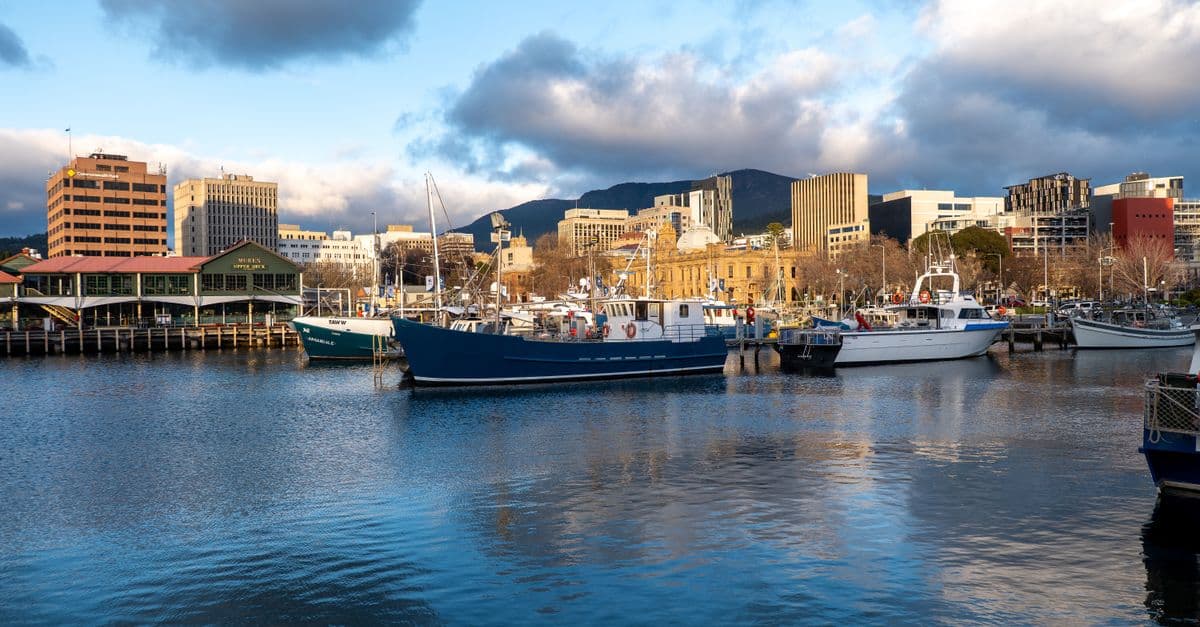
SEO Tasmania done properly: why Hobart and Launceston are two of the most winnable local markets in Australia, and the exact playbook mainland agencies never bother building for Tasmanian businesses.
If you run a business in Hobart or Launceston, you've probably had the same experience with mainland marketing agencies. They quote you Sydney prices, send you a Melbourne strategy, and talk about your market like it's a suburb of somewhere bigger. It isn't. Tasmania is its own search market, and almost nobody is optimising for it properly.
That last part is your opportunity. SEO Tasmania wide is one of the least competitive local search games in the country. The same effort that gets you nowhere in Parramatta can put you at the top of the map pack in Sandy Bay or Kings Meadows within months, because most of your competitors are doing nothing at all.
This guide covers how Hobart and Launceston search behaviour differs, running a Google Business Profile in a low-density market, review strategies for communities where everyone knows everyone, which suburbs and regional centres to target, and why AI search is quietly handing regional businesses an advantage. If you want the shortcut, our SEO Hobart and SEO Launceston pages cover done-for-you options, or get a free website audit and see exactly where you stand first.
TL;DR
- Tasmania is one of the least competitive local search markets in Australia, so consistent basic local SEO produces outsized results in Hobart and Launceston.
- Hobart searchers use suburb-level terms like "physio Sandy Bay", while Launceston searchers mostly use the city name, so the two cities need different page structures.
- In a low-density market, a complete Google Business Profile with weekly activity often beats competitors outright, because most Tasmanian profiles are claimed but abandoned.
- Reviews carry extra weight in tight-knit Tasmanian communities, where a visible pattern of specific, replied-to reviews doubles as word of mouth.
- Regional centres like Devonport, Burnie and Kingston are effectively uncontested in many service categories, and a single well-built location page can own them.
- Mainland agencies skip Tasmania because the search volumes look small on paper, which is exactly why the businesses that do invest win quickly.
- AI tools like ChatGPT and Google's AI Overviews have few strong Tasmanian sources to cite, so clear, well-structured local content gets recommended fast.
Why Tasmania is Australia's most winnable local search market
Here is the maths that mainland agencies get wrong. They look at "seo hobart" or "electrician launceston" search volumes, compare them to Brisbane or Melbourne, and conclude the market is too small to bother with. What they miss is the other side of the equation: competition.
In a big mainland city, ranking for "plumber + suburb" means beating dozens of businesses that all have agencies, review funnels and suburb pages. In Hobart, you're often competing against a handful of businesses, most with a half-finished Google Business Profile and a website untouched since launch. In Launceston, Devonport or Burnie, it's thinner still.
Low volume with almost no competition beats high volume with brutal competition, every time, for a small business. The ceiling is lower here, but so is the barrier, and the barrier is what actually stops most businesses.
The practical takeaway: in Tasmania, the fundamentals are the whole game. You don't need aggressive link building or a content team. You need a complete profile, consistent citations, steady reviews and a few genuinely good location pages, maintained every month. That's it.
How Hobart and Launceston search behaviour differs
Hobart and Launceston are separated by two and a half hours of highway, and they search differently.
Hobart: suburb intent in a small city
Greater Hobart holds around a quarter of a million people, spread across geographically distinct areas: the city and inner suburbs, the Eastern Shore across the Derwent, Glenorchy and the northern suburbs, and Kingston to the south. Because the river and the terrain carve the city into pockets, Hobart searchers often think in suburbs. Someone in Bellerive doesn't want a dentist in Glenorchy. They search "dentist Bellerive", "physio Sandy Bay", "cafe Battery Point", "mechanic Moonah".
For you, that means Hobart rewards a modest suburb-page strategy. Not the twenty-page cluster a Melbourne business needs. Three to six pages covering your real catchment: Sandy Bay, Battery Point and the CBD for an inner-city clinic, or Kingston, Blackmans Bay and Margate for a southern tradie. Our SEO Hobart page breaks down the structure suburb by suburb.
Launceston: the city name does the work
Launceston is under half Hobart's size, and search behaviour widens accordingly. People overwhelmingly search "service + Launceston" rather than "service + Newstead". Suburb names show up, but the city term carries most of the volume, and customers happily use a business from the other side of town.
So a Launceston business usually needs one excellent Launceston page rather than a suburb cluster, with the suburbs you serve (Riverside, Prospect, Mowbray, Kings Meadows, Newstead, Invermay) mentioned inside that page and your Google Business Profile. A Melbourne-style suburb strategy here produces thin pages competing with each other for tiny volumes. One strong page beats ten weak ones. The SEO Launceston page covers what that one strong page needs.
The northern corridor
Launceston also anchors a corridor of towns along the Bass Highway: Deloraine, Westbury, Perth, Longford, and further out Devonport and Burnie. These are searchable markets in their own right, and most have no locally optimised competitor at all. More on that below.
When someone in your suburb asks AI who to call, whose name does AI give?
Google Business Profile in a low-density market
Your Google Business Profile is the single highest-leverage asset in Tasmanian local SEO, and the bar for winning with it is embarrassingly low. In most Tasmanian service categories, the map pack is decided between profiles that are claimed but abandoned. A profile that is merely complete and active often wins outright.
Complete and active means, at minimum:
- The most specific primary category you qualify for, plus genuine secondary categories.
- A local 03 number, not just a 1300 line.
- Accurate hours, including Tasmanian public holidays.
- Real photos of your team, premises and jobs, added regularly. Tasmanian searchers are wary of mainland operators with a virtual address, and real local photos settle that instantly.
- A service area that honestly reflects where you work.
- Weekly posts or photo updates. In markets this quiet, being the only visibly active profile is a ranking and click advantage at the same time.
One low-density quirk: with fewer businesses per category, Google's map pack in Tasmania sometimes pulls results from surprisingly far away to fill three spots. That's good news. A Kingston business can appear for Hobart CBD searches if the profile and website signal that coverage clearly.
We've covered profile optimisation in depth in our Google Business Profile guide, so this post won't repeat the checklist. Read it, apply it, and know that in Tasmania it takes you further than anywhere on the mainland.
Review strategy for tight-knit communities
Tasmania runs on reputation. It's a state where people genuinely might know the tradie's cousin, where community Facebook groups drive real buying decisions, and where "who did your bathroom?" gets asked over the fence. Reviews are how that word-of-mouth culture shows up in search: Google weighs them for rankings, and locals read them like references.
What works differently in a tight-knit market:
- Specific replies matter more. "Thanks Sarah, glad the heat pump's sorted before winter" reads as a real business talking to a real neighbour. Generic corporate replies are a liability in Tasmania.
- Steady beats big. Two or three reviews a month, every month, outperforms a burst of twenty followed by silence. In small markets, recency is visible, and a profile whose last review is eighteen months old looks closed.
- Mention places naturally. Replies that reference Sandy Bay, Riverside or Devonport strengthen your relevance for those areas without a word of website copy.
- Never fake it. In a community this connected, a suspicious review pattern gets noticed by actual humans, not just Google's filters, and the reputational cost is worse than the penalty.
Build the ask into how you finish jobs: a direct review link by SMS within an hour of completing the work. That one habit, kept up for a year, puts most Tasmanian businesses ahead of every competitor in their category.
→ Not sure where you stand? Our free local AI SEO audit tests the questions your customers ask and shows you the answer. See who AI recommends.
Suburb and regional targeting: Sandy Bay to Burnie
The right page structure changes with density across the state.
| Market | Structure that wins | Example targets |
|---|---|---|
| Inner Hobart | Small suburb cluster, one page each | Sandy Bay, Battery Point, New Town, North Hobart |
| Greater Hobart | Area pages for distinct pockets | Kingston and Blackmans Bay, Eastern Shore (Bellerive, Howrah), Glenorchy and northern suburbs |
| Launceston | One strong city page, suburbs mentioned within it | Launceston, with Riverside, Kings Meadows, Newstead, Prospect woven in |
| North-west coast | One page per town | Devonport, Burnie, Ulverstone |
| Regional corridors | One page per town you genuinely service | Longford, Deloraine, New Norfolk, Sorell |
Two rules keep this honest. First, only build pages for places you actually service, and make each page genuinely local: travel times from your base, the jobs you do there, landmarks and pockets you know. A Kingston page that could describe Kingston in any state is a doorway page, and Google suppresses those. Second, don't out-build the market. Launceston does not need eight suburb pages. Hobart rarely needs more than six. Regional towns need one each.
The regional towns are the closest thing to free rankings in Australian local SEO. Devonport and Burnie each have tens of thousands of residents, real commercial demand, and in many service categories not a single business with a dedicated, well-written town page. If you're based in Launceston and willing to work the coast, those pages can pay for themselves with the first job they bring in. Keep your citations consistent while you do it, because in thin markets a clean NAP profile stands out even more.
Why mainland agencies get Tasmania wrong
Agency economics are built on volume. Retainers get justified with big keyword numbers, and Tasmanian keywords look small in every research tool. So Tasmanian clients get deprioritised, handed junior staff, or fitted to a template written for Sydney: mass suburb pages that don't match how Launceston searches, and content aimed at keywords nobody in Tasmania types.
The tools make it worse. Keyword research platforms under-report low-volume regional terms, sometimes showing zero for searches that real Search Console data proves happen every day. An agency planning purely from those tools concludes there's nothing worth targeting in Burnie. Your own customers prove otherwise every time the phone rings.
There's also a trust mismatch. Tasmanian buyers notice when marketing sounds mainland. Copy that mentions the Derwent, kunanyi / Mount Wellington, Salamanca on a Saturday, or the drive down the Southern Outlet reads local because it is local. That texture can't come from a template, and it's one of the few SEO advantages that gets stronger the smaller the market is.
None of this means you need a Tasmanian agency. It means whoever does the work, local or remote, must build for Tasmania specifically rather than resizing a capital-city playbook. That's the standard to hold anyone to, including us.
Be the business AI recommends
We test the real questions your customers ask across ChatGPT, Perplexity and Google AI, then show you which local businesses get named instead of you and what it takes to change that. Free, no pitch.
Run my free audit →Content only a Tasmanian business can write
You don't need a blog empire. You need a small number of pages that answer real Tasmanian questions with real Tasmanian detail:
- Seasonal service content tied to the actual climate: heat pump servicing before a Hobart winter, wood heater compliance, spring work timed to Tasmanian conditions rather than mainland ones.
- Cost and process guides framed locally, like renovating a heritage-listed Battery Point cottage versus a 1970s Kingston brick home.
- Service-area explainers: which towns you cover from Launceston, travel charges past Deloraine, how quickly you can reach the coast.
Each of these ranks for long-tail searches Tasmanians actually make, and feeds the AI layer that's increasingly answering those searches directly.
The AI search advantage for regional markets
ChatGPT, Perplexity and Google's AI Overviews now answer a growing share of local queries directly: "best physio in Hobart", "who does heat pump installs in Launceston". These systems build answers from sources they can find and trust, and here's the regional twist: for Tasmanian queries, the pool of well-structured, factual local content is tiny.
That means the bar for being the business AI tools recommend is far lower in Hobart or Launceston than in Sydney. A site with clear service descriptions, real location detail, consistent citations, structured data and a healthy review profile becomes one of the only citable answers in its category. We've written a full breakdown of how ChatGPT recommends businesses, and the mechanics apply doubly in thin markets.
Practically, this is the fundamentals list you're already doing, plus structure: plain-language answers to real questions on your pages, schema markup so machines can parse who you are and where you operate, and FAQ content that stands alone when quoted. If you want this handled as a deliberate strategy rather than a side effect, that's what our AI SEO service does.
Early movers keep the position, too. Once an AI system has a reliable local answer, displacing it requires someone to build something clearly better. In Tasmania, right now, almost nobody is trying.
What to do first: a 90-day Tasmanian sequence
Starting from a typical position (claimed but neglected profile, ageing website, no reviews system), here's the order that works:
- Weeks 1 to 2: Fix your Google Business Profile completely. Categories, services, photos, hours, service area, local phone number.
- Weeks 2 to 4: Lock your name, address and phone format and correct it across every directory you can find.
- Weeks 3 to 6: Build your core location pages: suburb cluster for Hobart, one strong city page for Launceston, town pages for regional centres you service.
- Week 4 onward: Start the review habit. SMS link after every job, reply to everything within two days.
- Weeks 6 to 12: Add two or three genuinely local content pieces, add schema, post to your profile weekly.
In a mainland capital, this sequence starts a long campaign. In Tasmania, it's frequently the whole campaign. Measure map pack positions, profile calls and enquiries monthly, and let the thin competition do the rest.
Get your free local AI SEO audit
Most local businesses never find out they lost the job, because AI answered before the customer ever searched. Our free local AI SEO audit shows you exactly where you stand today.
Tested: 151 top-rated Australian tradies · 15.9% named by ChatGPT · Q3 2026 study
Run my free audit →Frequently asked questions
Is SEO worth it for small businesses in Tasmania?
Yes, and arguably more so than on the mainland, because competition is so thin. Most Tasmanian service categories are contested by only a handful of businesses, many with neglected profiles and outdated websites. Consistent fundamentals, a complete Google Business Profile, steady reviews and a few strong location pages can reach the top of local results in months rather than years.
How is SEO different in Hobart compared to Launceston?
Hobart searchers use suburb and area terms like "physio Sandy Bay" or "plumber Kingston" because the river and terrain split the city into distinct pockets, so a small cluster of suburb pages works best. Launceston searchers mostly use the city name itself, so one excellent Launceston page that mentions suburbs like Riverside and Kings Meadows outperforms a spread of thin suburb pages.
How long does local SEO take to work in Tasmania?
Faster than mainland capitals, because there are fewer competitors to displace. Early map pack movement often shows within two to three months, and in lightly contested categories a well-executed campaign can hold top local positions inside six months. Competitive Hobart categories like dental or legal take longer than regional trades.
Which Tasmanian suburbs and towns should my business target?
Target where you genuinely work. For Hobart businesses that usually means a handful of areas such as Sandy Bay, Battery Point, Kingston, the Eastern Shore and Glenorchy. Launceston businesses should own the city term first, then consider corridor towns like Longford or Deloraine. Devonport, Burnie and Ulverstone are underserved markets worth their own pages for any business servicing the north-west coast.
Why do mainland SEO agencies ignore Tasmania?
Their business model runs on big search volumes, and Tasmanian keywords look small in research tools, which also under-report regional searches. Tasmanian clients get templated capital-city strategies that don't match how Hobart and Launceston actually search. The result is a market where the few businesses doing locally built SEO face very little serious competition.
Does AI search matter for Tasmanian businesses yet?
Yes, because AI tools like ChatGPT and Google's AI Overviews already answer local questions such as "best electrician in Launceston", and they have very few strong Tasmanian sources to cite. A business with clear, structured, genuinely local content can become the default AI recommendation in its category faster in Tasmania than almost anywhere else, and early positions tend to stick.
The short version: Tasmania rewards the boring fundamentals faster than any mainland market, and almost nobody down here is doing them. Fix the profile, clean the citations, build a small number of genuinely local pages, keep reviews flowing, and structure your content so both Google and AI tools can quote it.
Find out exactly where your business stands with a free website audit, or go straight to the specifics for your city on our SEO Hobart and SEO Launceston pages.