

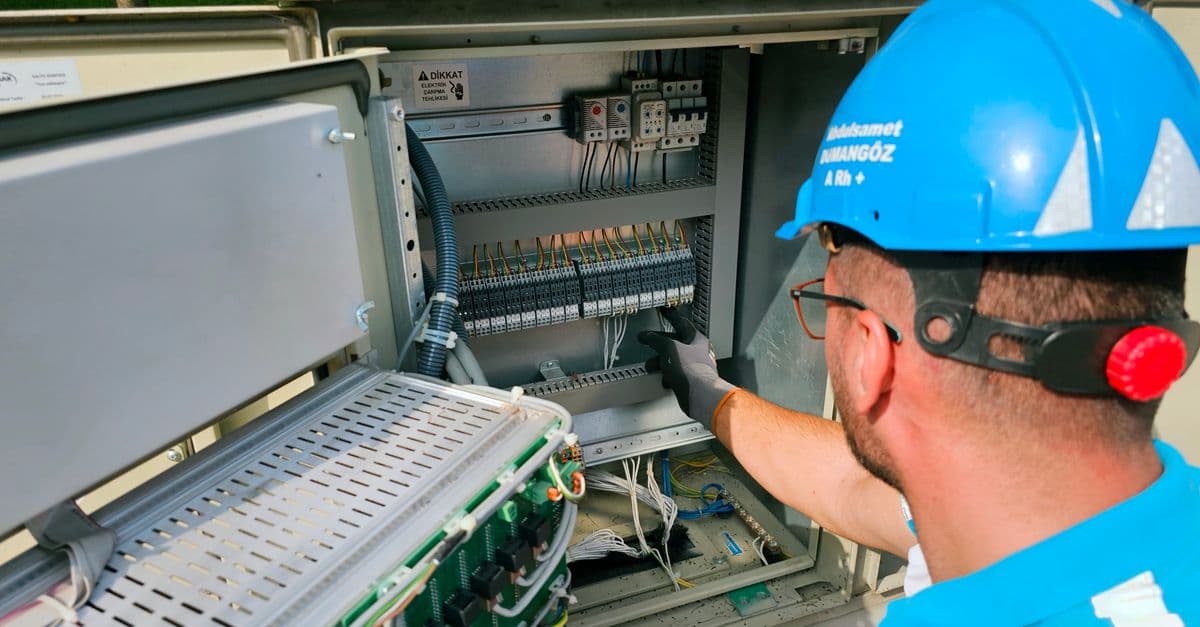
How Google Ads for electricians works in 2026: campaign types, keywords, negatives, ad copy, landing pages, call tracking, and indicative AUD budgets.
Google Ads for electricians is one of the fastest ways to turn an empty diary into booked jobs, because it puts your business in front of people the moment they search for a sparkie. When someone types "electrician near me" at 9pm with no power to half the house, they're ready to call now-and a well-built campaign captures exactly that intent. This guide covers the campaign types, keywords, ad copy, landing pages, call tracking, and indicative AUD budgets that make the channel pay for itself.
Unlike SEO, which compounds over months, paid ads switch lead flow on almost immediately. The trade-off is that you pay for every click, so the difference between a campaign that drains your account and one that fills your calendar comes down to how tightly it's set up.
TL;DR
- Google Ads for electricians is one of the fastest ways to turn an empty diary into booked jobs, because it captures people at the exact moment they search for a sparkie.
- For most electricians the strongest setup is Local Services Ads for cheap, vetted, pay-per-lead calls plus a tightly targeted Search campaign; add Performance Max only once those two are profitable.
- Group keywords by intent, run emergency and planned work separately, and maintain a ruthless negative keyword list to stop budget leaking on jobs, courses and DIY searches.
- Winning ads lead with trust and speed: licensed and insured, response time, local proof, and a direct call to action, with call and location assets attached.
- Send clicks to matched landing pages, never the homepage, and set up call tracking, because most electrician leads arrive by phone and an account counting only form fills is flying blind.
- Indicative Australian costs: roughly $8 to $30+ per click on competitive keywords, $25 to $80+ per qualified LSA lead, and sensible starting budgets around $1,500 to $3,000 per month.
- Run residential and commercial as separate campaigns; the value, volume and messaging differ too much to share one budget.
Why Google Ads Suit Electricians
Electrical work splits neatly into two kinds of demand, and Google Ads serves both well.
The first is emergency and urgent work-a tripped switchboard, no hot water, a burning smell from a power point, or a fault that's left a house or shop in the dark. These searches carry the highest intent of any in the trade. The person isn't browsing; they want someone on the phone in the next five minutes. A call-focused ad sitting at the top of the results wins that job before a competitor's website has even loaded.
The second is planned work-switchboard upgrades, downlights, ceiling fans, EV charger installation, solar, smoke alarm compliance, rewiring, and renovation fit-outs. These searchers compare a few options before booking, so your ad needs to signal trust quickly: licensed, insured, upfront pricing, strong reviews.
Because both job types are searched for constantly and a single install or callout can be worth hundreds or thousands of dollars, the maths usually works. You can see the full range of electrical businesses we support on our electricians we help page.
The Main Campaign Types
Three Google Ads formats matter most for electricians. The best accounts usually run a combination rather than betting on one.
Search campaigns
Standard text ads triggered by keywords. This is the backbone of most electrician accounts because it targets people actively searching for your services. You control the keywords, the ad copy, and the landing page, which makes Search the most predictable and tunable format. Start here.
Local Services Ads (LSAs)
LSAs sit right at the very top of the results with a "Google Guaranteed" badge, your reviews, and a click-to-call button. You're vetted through Google's licence and insurance checks, and you pay per lead rather than per click-so you're charged for a phone enquiry, not a curious click. For trades, LSAs often deliver the cheapest qualified leads in the account, which is why they deserve their own playbook. We cover the setup in detail in our guide to Google Local Services Ads for contractors.
Performance Max (Pmax)
Pmax uses Google's automation to serve ads across Search, Maps, YouTube, Gmail, and the Display network from a single campaign. It can be useful for catching demand your Search campaign misses, but it hands a lot of control to the algorithm and can spend on low-quality placements if you're not careful. Treat Pmax as a supplement once your Search and LSA campaigns are converting-not as your starting point.
Quick answer: For most electricians, the strongest setup is Local Services Ads for cheap, vetted calls, plus a tightly targeted Search campaign for everything LSAs don't cover. Add Performance Max only once those two are profitable.
Be the electrical business AI recommends
Keywords and Negative Keywords
Your keyword list is where budgets are won or lost. Group keywords by intent so emergency and planned searches can have their own ads and bids.
High-intent keywords to target:
- emergency electrician + [suburb/city]
- electrician near me
- 24 hour electrician
- switchboard upgrade
- EV charger installation
- downlight / ceiling fan installation
- smoke alarm electrician
- commercial electrician [city]
Just as important is the negative keyword list, which stops you paying for clicks that will never convert. Without it, you'll burn budget on people looking for jobs, courses, or free help. Common negatives for electricians include:
- jobs, careers, apprenticeship, hiring, salary
- TAFE, course, training, how to
- DIY, free, cheap, second hand
- wholesale, supplies, parts, products
- union, licence renewal
Use exact and phrase match for your money keywords so you control what triggers your ads, and review the search terms report every week or two to add new negatives as they appear.
Writing Ad Copy That Gets the Call
Electrician ads don't need to be clever-they need to be clear, trustworthy, and fast to act on. The strongest ads lead with the job, prove credibility, and remove friction.
What to include:
- Licensed and insured-the single most important trust signal for a trade.
- Response time-"Same-day service" or "Fast response, 7 days" for urgent searches.
- Local proof-mention the suburb or city so the ad feels local, not national.
- A reason to choose you-upfront pricing, no call-out fee, or a strong review count.
- A direct call to action-"Call now for a free quote."
Always use ad extensions (now called assets): call assets so the number shows on mobile, location assets, and sitelinks to your main services. For urgent campaigns, schedule call-only ads during the hours you actually answer the phone-there's no point paying for a 2am click you can't service.
Landing Pages That Convert the Click
Sending paid clicks to your homepage is one of the most common ways electricians waste money. The fix is a focused landing page that matches the search.
A high-converting electrician landing page has:
- A headline that mirrors the search ("Emergency Electrician in [City]").
- A phone number visible at the top, tap-to-call on mobile, and repeated down the page.
- Trust signals up high: licence number, insurance, Google review stars, guarantees.
- A short enquiry form for people who'd rather type than call.
- Clear service and service-area information so visitors know they're covered.
- Fast load speed-trade searchers on phones bounce within seconds if a page lags.
If your site can't quickly spin up dedicated, fast-loading pages for each core service, that's usually the first thing to fix before scaling spend.
→ Free free AI SEO audit for electricians: see whether ChatGPT and Google AI recommend your electrical business, and who they name instead. Get the free AI audit.
Call Tracking and Measuring Leads
Most electrician leads arrive by phone, not by form-which means an account that only counts form fills is flying blind. Call tracking is essential.
Set up Google's call conversion tracking and use call tracking numbers to record which campaigns, keywords, and ads actually generate phone enquiries. With that data you can shift budget toward what books jobs and cut what doesn't. Without it, you're optimising on guesswork and will almost certainly overspend on the wrong keywords.
It's also worth tracking lead quality, not just lead volume. Twenty cheap clicks that never call are worse than five calls that turn into two booked jobs.
Budget and Cost (Indicative AUD Ranges)
Costs vary widely by city, competition, and the services you target-emergency and commercial keywords are pricier than general residential ones. Treat the figures below as indicative ranges for the Australian market in 2026, not a quote.
| Item | Indicative AUD range |
|---|---|
| Cost per click (Search) | ~$8-$30+ for competitive electrician keywords |
| Cost per lead (LSAs) | ~$25-$80+ per qualified lead |
| Sensible starting monthly budget | ~$1,500-$3,000/month |
| Established/competitive metro budget | ~$4,000-$10,000+/month |
A practical way to set your budget is to work backwards from the value of a job. If your average job is worth $400 and one in three leads books, you can afford a reasonable cost per lead and still profit comfortably. Start with enough budget to gather real data-too small a budget spread across too many keywords never gets the volume needed to learn-then scale what's working.
Residential vs Commercial
The two markets behave differently, and a smart account treats them separately.
Residential searches are higher in volume, lower in average value, and often urgent. Decisions are quick and emotional-people want a trustworthy sparkie who'll turn up fast. Ads should emphasise speed, reviews, and upfront pricing.
Commercial searches are lower in volume but far higher in value, with longer decision cycles. Property managers, builders, and business owners want to know you can handle compliance, scale, and ongoing maintenance. Ads should emphasise experience, accreditations, and capability rather than a same-day call-out. Because the keywords and messaging differ so much, run residential and commercial as separate campaigns so budgets and bids don't compete.
Common Mistakes to Avoid
- Sending all traffic to the homepage instead of matched landing pages.
- No call tracking, so you can't tell which clicks become jobs.
- No negative keywords, so budget leaks on jobs, courses, and DIY searches.
- Running ads when you can't answer the phone-schedule call ads to your hours.
- Mixing emergency and planned work in one campaign with one message.
- Starting with Performance Max before Search and LSAs are proven.
- Bidding too broadly on cheap broad-match keywords that attract irrelevant clicks.
- Judging too early-give the account a few weeks of data before big changes.
Find out if AI recommends your electrical business
Most electricians never find out they lost the job, because AI answered before the customer ever searched. Our free AI SEO audit for electricians shows you exactly where you stand today.
Tested: 151 top-rated Australian tradies · 15.9% named by ChatGPT · Q3 2026 study
Get the free AI audit →Frequently Asked Questions
How much should an electrician spend on Google Ads?
Most electricians start with an indicative budget of around $1,500-$3,000 per month, with competitive metro businesses spending $4,000-$10,000+ as they scale. The right number depends on your average job value, your market's competitiveness, and how many leads you can service-so set the budget against the value of the jobs it brings in rather than a fixed figure.
Are Local Services Ads better than Search ads for electricians?
They serve different purposes, and most strong accounts use both. LSAs often deliver the cheapest qualified leads because you pay per lead and appear above everything else with a Google Guaranteed badge. Search ads give you more control over keywords, copy, and landing pages, and they cover services or queries LSAs don't. Run LSAs and Search together for the best coverage.
How quickly do Google Ads generate leads for electricians?
Almost immediately-that's the main advantage over SEO. Once your campaign is approved and live, you can receive calls the same day. The first few weeks are about gathering data and tuning keywords, negatives, and bids, after which performance and cost per lead usually improve.
Do I need a website to run Google Ads as an electrician?
For Search and Performance Max, yes-you need fast, relevant landing pages for the ads to send clicks to, and quality of those pages affects your costs. Local Services Ads are the exception, as they can run largely off your Google profile and reviews, which is why many electricians start there while their website is built or improved.
The Bottom Line
Google Ads for electricians works because it meets people at the exact moment they need a sparkie-whether that's an emergency call-out or a planned switchboard upgrade. The accounts that profit aren't the ones with the biggest budgets; they're the ones with tight keywords, ruthless negatives, matched landing pages, and proper call tracking. Build on Local Services Ads and Search first, separate residential from commercial, measure the phone calls that matter, and scale what books jobs.
If you'd like to see whether your site is ready to convert paid clicks into booked work, grab a free website audit and we'll show you exactly what's holding it back.