

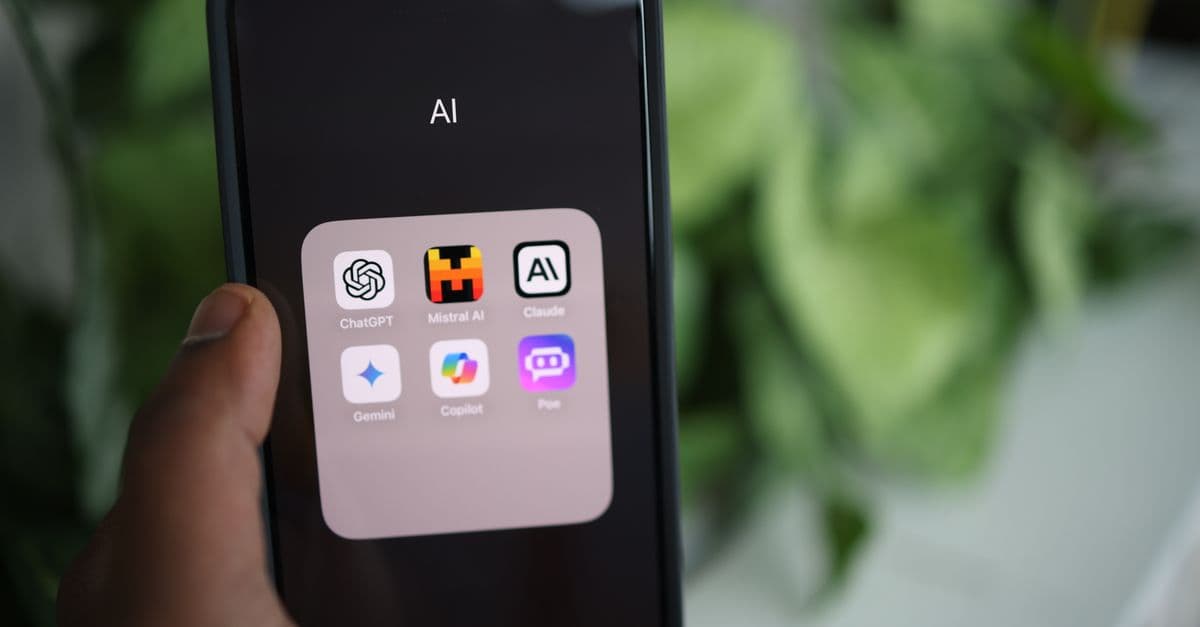
Claude is the quietest of the major AI engines but powers a meaningful slice of enterprise queries. Here's how to get cited inside Claude responses, and why the optimisation patterns differ from ChatGPT and Perplexity.
Claude is the quietest of the four major AI engines.
ChatGPT generates the headlines. Perplexity wins SEO conversation. Gemini sits inside Google's everything. Claude works in the background, powering Notion AI, Slack AI, GitHub Copilot's longer context features, and a long tail of enterprise tools.
But Claude users are not random. They skew higher-intent, more technical, and more enterprise. A single citation inside a Claude response can reach a senior decision-maker more reliably than ten ChatGPT citations.
This guide is the optimisation playbook for getting cited inside Claude in 2026. The patterns that work are not identical to the ChatGPT search guide or the Perplexity guide. Here is what is different and what to do about it.
For broader context, pair this with our GEO SEO complete guide and AEO services overview.
TL;DR
- To optimise for Claude AI in 2026, focus on training data presence, strong trust signals, and long-form structured content, because Claude triggers web search more conservatively than ChatGPT or Perplexity.
- Claude is the quietest of the four major AI engines but powers Notion AI, Slack AI, and a long tail of enterprise tools, and its users skew higher-intent, technical, and B2B.
- Allow ClaudeBot, anthropic-ai, and Claude-Web in your robots.txt and publish a comprehensive llms.txt; Anthropic has been the most explicit of the major engines about respecting llms.txt as a hint.
- Claude weights author signals heavily: real bylines, credentials, and linked author pages with Person schema give it the confidence it needs to cite you.
- Claude rewards 2,000 to 5,000 word structured resources, content that cites its own sources, crawlable PDF whitepapers, and glossary depth.
- Pure marketing copy, stock testimonials, and aggressive CTAs throughout content actively fail for Claude.
- Claude citations rarely drive direct click-through traffic; the value is brand exposure to senior, high-intent B2B decision-makers.
What Claude actually is in 2026
Claude is the family of large language models built by Anthropic. The current generation in mid-2026 is Claude 4.7. It is accessed three main ways:
Direct chat at claude.ai. Lower volume than ChatGPT but higher per-user time-on-product. The audience skews professional and technical.
Embedded in productivity tools. Notion AI, Slack AI, Linear's AI features, and a growing list of B2B SaaS rely on Claude under the hood. Users may not know they are talking to Claude; they just know "the AI inside my work tool."
Via Claude API for enterprise builds. Custom internal tools at Fortune 500s, government agencies, and well-funded startups frequently choose Claude for its reliability, long-context handling, and Anthropic's safety reputation.
The implication for AEO: Claude citations matter most for B2B-heavy categories. SaaS, consulting, professional services, technical training, enterprise software. They matter less for purely consumer categories.
For more on the engine landscape, see our AEO vs GEO vs AI SEO comparison.
How Claude differs from ChatGPT and Perplexity
Three differences matter for optimisation strategy.
Web search is more conservative
Claude has web search via the Anthropic API and on claude.ai, but it activates more conservatively than ChatGPT or Perplexity. Claude prefers to answer from training data when it can; it triggers web search when the user explicitly asks for current information or when the question involves time-sensitive data.
The implication: training data presence matters more for Claude than for the other engines. If your brand was not represented in trustworthy web sources before Claude's training cutoff, you start at a disadvantage.
Higher reasoning weight
Claude is more cautious about asserting facts. It will hedge ("according to one source", "as of late 2025") more often than ChatGPT, especially for commercial recommendations. This means citations require more confidence in the underlying source.
The implication: your site needs stronger trust signals (clear authorship, dates, named credentials, real reviews) for Claude to cite you with confidence.
Long context, deeper analysis
Claude excels at processing long documents and producing structured analysis. Users often paste full pages, PDFs, or even multiple documents into Claude. The brand cited inside that analysis tends to be the one whose source material is most useful to the long context.
The implication: long-form, structured, well-cited content (whitepapers, deep guides, research reports) earns Claude citations even when shorter content does not.
Find out if AI recommends your business
The Claude AEO checklist
Specific actions that move the needle.
1. Make sure ClaudeBot can crawl your site
Open yourdomain.com/robots.txt. Confirm ClaudeBot and anthropic-ai are explicitly allowed.
User-agent: ClaudeBot
Allow: /

User-agent: anthropic-ai
Allow: /

User-agent: Claude-Web
Allow: /
If they are missing, fix this first. Claude's web search uses ClaudeBot for live retrieval. Without explicit allow, you may not be retrieved.
For the full crawler list, see our llms.txt beginner guide.
2. Publish a comprehensive llms.txt
Of all the major engines, Anthropic has been most explicit about respecting llms.txt as a hint. Use the free llms.txt generator and publish.
Make sure your llms.txt includes:
- Brand identity declared at the top
- Long-form pillar content URLs (not just landing pages)
- Glossary or definitions if you have them
- Author URLs
Claude reads llms.txt carefully when assessing whether your site is a credible source.
3. Strong author bylines
Claude weights author signals more heavily than ChatGPT does. Every blog post and substantive page should declare:
- Real human author with full name
- Author bio with credentials
- Linked author page on your site (with Person schema)
For more on the structured-data side, see our schema markup guide.
4. Long-form content with explicit structure
Where ChatGPT will happily cite a 600-word post, Claude rewards 2,000-5,000 word resources with clear structure: numbered lists, comparison tables, explicit "Methodology" sections, dated claims.
The Orkkid blog posts we get the most Claude citations for are the deepest ones: the GEO SEO complete guide (3,500+ words), the 30-day AEO launch playbook, and the topical authority guide.
5. Citation discipline
Claude particularly rewards content that itself cites sources. If you make a claim, link to the source. If you cite a stat, reference where it came from. Claude pattern-matches "well-cited content" as a higher-trust source itself.
This is the reverse of much SEO advice from 2018-2022 which discouraged outbound links to "keep authority on the page." For AEO, especially Claude AEO, outbound links to credible sources help.
6. PDF and document presence
Claude users frequently work with PDFs. If you have whitepapers, research reports, or downloadable guides, publish them as crawlable PDFs (not gated downloads) and reference them from your llms.txt.
A site with two well-researched downloadable PDFs frequently outperforms a site with twenty thin blog posts in Claude citations.
7. Glossary depth
Claude users frequently ask definition questions, especially in technical domains. A site with a comprehensive glossary becomes a Claude reference for those queries.
Use DefinedTerm schema on glossary entries to reinforce the signal.
8. Documentation-quality service descriptions
Claude users assessing service vendors prefer documentation-style content over marketing copy. Restructure your service pages to read more like API documentation than brochure copy:
- Clear summary of what the service does (one paragraph)
- Methodology section (how the service is delivered)
- Inputs and outputs (what the client provides, what they receive)
- Pricing model (even if "contact for quote", explain the structure)
- Edge cases and exceptions
- FAQs
This is cousin to the content citability framework but tuned for technical audiences.
What does not work for Claude
Some patterns that work for ChatGPT or Perplexity actively fail for Claude.
Pure marketing copy
Claude users have higher tolerance for technical depth and lower tolerance for marketing fluff. Pages that read like brochures get downweighted.
Stock testimonials
Generic "this company is amazing" testimonials without specifics, names, or context get filtered. Real testimonials with names, roles, and specifics work.
Aggressive CTAs throughout content
Claude pattern-matches sales-y interruption ("Want to learn more? Click here!") as a quality signal against the source. Consolidate CTAs into clear footer or sidebar placements.
Low-quality outbound link spam
Linking out to credible authorities helps. Linking out to obvious affiliate sites, low-trust directories, or paid placements hurts.
→ 84% of top-rated service businesses never get named by AI. A free audit tells you which side you're on. Check my AI visibility.
Tracking Claude citations specifically
DataForSEO supports Claude as one of the LLMs in the AI mention tools. When you run the AI Citation Checker tool, it tests ChatGPT and Perplexity by default. To extend to Claude, plus Gemini, plus AI Overviews requires either a paid tracking tool or a manual prompt panel run on Claude directly.
Manual approach:
- Generate your prompts with the Prompt Panel Generator
- Run each prompt in claude.ai (free or paid plan)
- Record whether your brand is named and what was said
- Track monthly
For tooling, see our AI citation tracking tools comparison - several options track Claude alongside the other engines.
A 60-day plan to lift Claude citation share
For an established Australian service business looking to rank in Claude responses.
Days 1-30: foundation
- Confirm robots.txt allows all Anthropic crawlers
- Publish llms.txt with deep content URLs
- Add author bylines to every blog post; link to author pages
- Publish or rewrite About page with credentials, dates, and verifiable facts
- Run baseline citation check manually in claude.ai for 5 prompts
Days 30-60: content
- Convert 2-3 of your top guides into longer, more structured deep-dives
- Publish or update at least one downloadable PDF whitepaper
- Add DefinedTerm schema to your glossary entries if you have them
- Audit existing blog posts: add outbound citations to credible sources
- Re-run Claude citation check for 5 prompts; compare to baseline
For the broader AEO sequence, see the 30-day launch playbook.
When a customer asks ChatGPT who to call, whose name does AI give?
We test the real questions your customers ask across ChatGPT, Perplexity and Google AI, then show you which service businesses get named instead of you and what it takes to change that. Free, no pitch.
Tested: 151 top-rated Australian tradies · 15.9% named by ChatGPT · Q3 2026 study
See who AI recommends →Frequently asked questions
Should I prioritise Claude over ChatGPT and Perplexity?
No, optimise for all four. Claude is rarely a dominant share of citations alone. The patterns that strengthen Claude visibility (long-form, well-cited, structured content) also lift ChatGPT and Perplexity citations.
Is Claude a meaningful traffic source?
Indirectly. Claude citations rarely produce direct click-through traffic at the volume ChatGPT does. The value is brand exposure to a high-intent audience and building "the AI says good things about us" reputation in B2B sales conversations.
How is Claude's training cutoff handled?
Anthropic updates Claude periodically. Each new version expands the training cutoff. Brand presence in trustworthy sources before the cutoff is stickier than presence after the cutoff (which depends on web search to surface).
What about Claude through API integrations?
Same content principles apply. Claude embedded in Notion or Slack uses the same retrieval and reasoning patterns as direct claude.ai conversations.
Should I publish all content as PDFs?
No, but having 1-3 high-quality PDFs in the mix helps. Most content should be HTML pages for proper crawling and ranking. PDFs are a supplement.
If you want help getting cited across Claude, ChatGPT, Perplexity, and Google AI Overviews together, book a free AI citation audit. We test thirty prompts across all four engines and send a personalised report inside 72 hours.
For deeper context, read the GEO SEO complete guide, how to optimize for ChatGPT search, Perplexity SEO complete guide, how to rank in Google AI Overviews, and our glossary. For service work, see AEO services.