

Mechanic SEO is a trust game. Drivers are scared of being ripped off, and they choose the workshop that looks honest online. Here is how independent Australian mechanics rank for rego, logbook, and repair searches.
Nobody googles a mechanic when their car is running fine. They search when something is wrong, the check engine light, a grinding noise, a rego due date, and they search with one fear running underneath every query: am I about to be ripped off? The workshop that answers that fear online gets the booking. The workshop with a bare website and twelve old reviews does not, no matter how good their work is.
That fear is the whole game in mechanic SEO. Dealerships trade on brand trust and charge for it. Chains trade on fixed prices and franchise polish. As an independent, your advantage is real: better prices than the dealer, better workmanship story than the chain, a face and a name behind the work. But none of that exists for a searcher unless your website and Google profile prove it before they ever call.
This guide covers how drivers actually search for mechanics, the rego and logbook patterns unique to Australia, service pages per job type, reviews as the deciding factor, Google Business Profile setup for workshops, and the AI search layer that is starting to decide which mechanics get recommended. If you want a head start, book a free website audit and we will show you exactly where bookings are leaking. For how we work with workshops specifically, see our auto repair SEO page.
TL;DR
- Mechanic SEO is trust-driven: drivers search with quote anxiety, and the workshop that proves honesty online wins the booking before anyone picks up the phone.
- Rego and roadworthy searches are state-specific ("pink slip" in NSW, "roadworthy certificate" in Victoria and Queensland) and deserve dedicated pages using local terminology.
- Logbook servicing pages win drivers away from dealerships, because Australian law lets independents service new cars without voiding the manufacturer warranty.
- Drivers search by job and suburb ("brake repairs [suburb]", "clutch replacement near me"), so each job type needs its own service page.
- Reviews are the deciding factor: volume, recency, and replies that show how you handle problems matter more than any line of website copy.
- AI engines already recommend mechanics by name, and the signals they read, reviews, direct-answer content, consistent listings, are the same ones that win Google rankings.
How drivers actually choose a mechanic
Every mechanic search carries baggage. Industry surveys have found for years that a large share of drivers do not trust car repairers by default, and you can see it in what people type: "honest mechanic near me", "how do I know if my mechanic is ripping me off", "second opinion on car repair quote".
That means your SEO job is only half about ranking. The other half is what the searcher sees when they land: real photos of your workshop and team, plain-English explanations of common repairs, named mechanics with actual experience, clear statements about how you quote ("we call before any extra work, always"), and a wall of recent reviews. A workshop that explains what a brake machining job involves, and roughly what the parts cost, reads as honest. A workshop that says "contact us for a quote" and nothing else reads like the reason people are anxious in the first place.
The searches themselves fall into four buckets, and each needs its own home on your site:
- Compliance searches: rego inspections, roadworthy certificates, safety checks. Deadline-driven, price-sensitive, easy to win.
- Maintenance searches: logbook service, car service near me, oil change. Comparison-driven, and where dealership vs independent gets decided.
- Repair searches: brakes, clutch, timing belt, suspension, check engine light. Problem-driven, anxious, research-heavy.
- Brand and suburb searches: "Toyota mechanic [suburb]", "European car specialist near me". Specific intent, high value, low competition.
Rego, roadworthy, and safety checks: the deadline traffic
Every registered vehicle in Australia eventually needs an inspection, and drivers search for them with a deadline attached. This is the most predictable traffic a workshop can own, and the terminology is state-specific, so use the words your customers use.
In NSW, drivers search "pink slip" and "eSafety check" for rego inspections. In Victoria and Queensland, it is "roadworthy certificate" or "RWC", typically needed when selling or transferring a vehicle. Other states have their own inspection triggers and terms. A Melbourne workshop with a page titled "Vehicle Safety Inspections" instead of "Roadworthy Certificates Melbourne" is invisible for the search its customers actually run.
Build a dedicated page per inspection type you are authorised for, and answer the deadline buyer's questions immediately: what the inspection covers, how long it takes, whether they can wait, what happens if the car fails, and what a re-check costs. Add your authorised inspection status prominently. These pages convert at high rates because the intent is pure: the searcher must get this done, soon, nearby.
Find out if AI recommends your workshop
Logbook servicing: the page that takes work off dealerships
The single most profitable misconception in your market is that new cars must be serviced at the dealership to keep the warranty. They do not. Under Australian Consumer Law, and as the ACCC has publicly stated, an independent workshop can carry out logbook servicing using quality parts without voiding the manufacturer's warranty, provided the service is done properly to the manufacturer's specifications.
Most drivers do not know this. So tell them, on a dedicated logbook servicing page:
- The warranty facts, stated plainly and accurately
- That you service to manufacturer specifications and stamp or digitally record the logbook
- The price difference drivers typically see between dealer and independent servicing, framed honestly as a range
- Which makes you service, especially if you specialise
This page targets searches like "logbook service [suburb]" and "does logbook service at a mechanic void warranty", and every driver it converts is a customer taken directly from a dealership service department, usually for years. It is the highest-leverage single page in auto repair seo.
Service pages per job type
Drivers do not search "mechanical repairs". They search the job: "brake pad replacement [suburb]", "clutch replacement cost", "timing belt replacement near me", "car aircon regas". One general services page cannot rank for twenty different jobs. Twenty focused pages can, and building them is the core of seo for mechanics.
Build a page for each job type you want more of: brakes, clutch, suspension and steering, cooling system, timing belts and chains, auto electrical and diagnostics, air conditioning, tyres if you do them. Each page should explain the symptoms that bring people to the search ("grinding when braking", "clutch slipping under load"), what the job involves, how long the car is off the road, and an honest price range with the caveats that make ranges real (vehicle make, parts choice).
The EV and hybrid page: get in early
Hybrid and electric vehicles are a growing slice of the Australian fleet, and their owners already search "EV servicing near me" and "hybrid battery check" with very few independent workshops answering. If you have the training and equipment, build the page now. Ranking for EV servicing terms today costs a fraction of what it will cost once every workshop wakes up to it, and it positions you for the decade ahead rather than the decade behind.
Brand plus suburb: the specialist searches
Some of the best searches in mechanic seo pair a car brand with a location: "Toyota mechanic Blacktown", "European car mechanic near me", "Subaru specialist". These drivers have decided they want brand expertise without dealer prices, which is precisely the independent's pitch.
If you genuinely specialise, build brand pages: the models you commonly work on, the known issues you fix routinely, the diagnostic gear you run for that marque, and reviews from owners of those cars. If you are a generalist, a single "makes we service" page with real detail still captures a share of these searches. Never claim a specialisation you cannot back up in the workshop, because the review that exposes it will cost more than the page earned.
→ Not sure where you stand? Our free AI SEO audit for mechanics tests the questions your customers ask and shows you the answer. Get the free AI audit.
Reviews: the deciding factor, full stop
For most drivers, reviews are not one input among many. They are the decision. A driver with quote anxiety reads your reviews looking for one thing: evidence that you did not rip someone off. Reviews that say "quoted X, charged X", "called me before doing extra work", "showed me the old parts" are worth more than anything you could write about yourself.
Build the system:
- Ask every satisfied customer by SMS within 24 hours of pickup, with a direct Google review link.
- Nudge the wording without scripting it: "if you mention what we worked on, it helps other drivers".
- Reply to every review, naming the job and suburb naturally ("Glad the clutch is behaving, thanks for trusting us with the Hilux").
- Reply to negative reviews calmly and factually. Prospective customers read your worst reviews first, and your reply is the real test.
- Never incentivise or gate reviews. Both breach Google's policies and risk the profile the whole strategy depends on.
Velocity matters as much as volume. A steady weekly trickle of fresh reviews beats a large stale pile, for Google, for the anxious driver, and for the AI engines that quote reviews when recommending workshops.
Google Business Profile for workshops
Unlike most trades, a workshop is a storefront business: customers come to you. That simplifies the setup and raises the stakes on getting the details right.
- Show your address and mark your service area if you also do mobile work or offer pickup.
- Primary category: Auto repair shop. Add genuine secondaries only: Mechanic, Brake shop, Auto air conditioning service, Auto electrical service, Vehicle inspection if authorised. The primary category is a major ranking input, so do not leave it on something generic.
- Set accurate hours, including Saturday. Weekend hours are a differentiator drivers filter on.
- List services individually with descriptions and, where you can stand behind them, prices. Logbook service, brake repairs, roadworthy inspections, each on its own line.
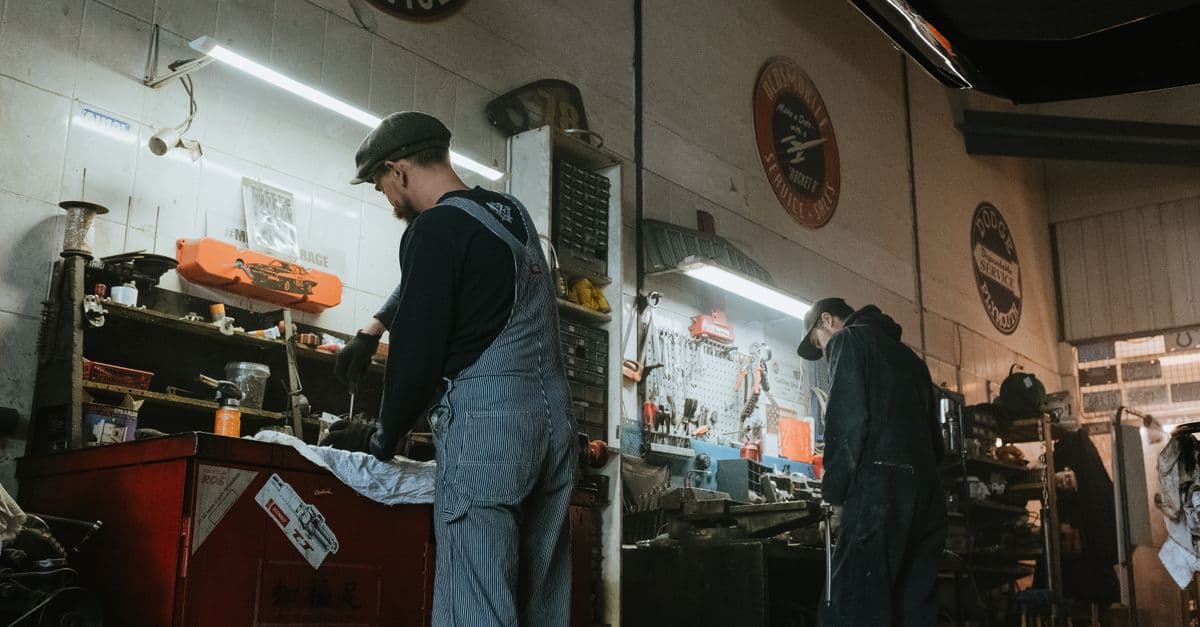
- Photos: workshop, hoists, team, and cars being worked on. A visible, busy, clean workshop defuses the anxiety that defines this industry.
The general playbook is in our Google Business Profile optimisation guide, and consistent name, address, and phone details across directories reinforce it, covered in our local citations guide.
The AI search layer for mechanics
Drivers now ask ChatGPT and Google's AI results questions like "is this brake quote reasonable" and "good independent mechanic near me for a Mazda". The answers name workshops.
Which workshops get named depends on signals you control: review volume and recency, consistent directory listings, service pages that answer questions in their first sentences, and structured data that tells engines exactly what you do, see our schema markup glossary entry. The logbook and repair pages described above are ideal citation material because they answer the exact questions drivers put to AI engines, and writing them in that direct style is a discipline of its own, covered in how to write content AI will cite.
This layer, Answer Engine Optimization on top of traditional rankings, is where the next few years of advantage sit. We explain the full service on our AEO page. For a workshop, the takeaway is simple: the same honest, specific, direct-answer pages that beat the dealership on Google also get you recommended by AI. One effort, two channels.
Mistakes that keep workshops invisible
One services page for every job. Brakes, clutches, and rego checks are different searches from different drivers. Split them.
Ignoring state terminology. A Sydney workshop without a pink slip page, or a Melbourne one without a roadworthy page, is invisible for its most predictable traffic.
No prices anywhere. Price silence feeds quote anxiety. Honest ranges build the trust that wins the booking.
Letting reviews go quiet. A stale profile reads as a workshop in decline, to Google, to drivers, and to AI engines.
A website that looks like 2012. Drivers judge your workshop by your website before they see either. If yours is past patching, our web design service builds fast local sites with the SEO structure already in place.
When a driver hears a grinding noise, whose name does AI give?
One report: who AI recommends in your suburbs right now, what they have that you don't, and the fastest path to being the name it gives. Sent within 72 hours.
Tested: 151 top-rated Australian tradies · 15.9% named by ChatGPT · Q3 2026 study
Get the free AI audit →Frequently asked questions
How long does mechanic SEO take to work?
Expect early movement in 2 to 3 months and meaningful booking flow in 4 to 6 months for an established site. Inspection and logbook pages often move faster because the competition is mostly dealerships and chains that do not target suburb-level searches well. New websites take longer, so start before the quiet months arrive.
What are the best keywords for an independent workshop?
Job plus suburb terms deliver the best bookings: "logbook service [suburb]", "brake repairs [suburb]", "roadworthy certificate [city]", plus brand terms like "Toyota mechanic near me" if you specialise. Use your state's terminology for inspections, pink slip in NSW, roadworthy or RWC in Victoria and Queensland.
Can an independent mechanic do logbook servicing without voiding the warranty?
Yes. Under Australian Consumer Law, a new car warranty stays intact when an independent workshop performs logbook servicing to the manufacturer's specifications with appropriate quality parts, a position the ACCC has stated publicly. A dedicated page explaining this wins customers directly from dealership service departments.
How important are reviews for a mechanic?
They are usually the deciding factor. Drivers search with a fear of being overcharged and read reviews for proof of honesty: accurate quotes, calls before extra work, problems handled well. A steady flow of recent reviews, each answered, outweighs a large stale collection on both Google rankings and customer decisions.
Should a workshop publish prices on its website?
Publish honest ranges wherever you can: logbook service from-prices, typical brake job ranges with the caveats that affect them. Price silence amplifies the exact anxiety that sends drivers elsewhere, while credible ranges pre-qualify customers and build trust before the first phone call. Never publish precise prices you cannot hold.
Does AI search matter for mechanics yet?
Yes. Drivers already ask ChatGPT and Google's AI results for workshop recommendations and quote sanity-checks, and the engines name specific businesses based on reviews, listings, and direct-answer content. Workshops that build those signals now get recommended while competitors remain invisible, and the work overlaps almost entirely with good mechanic SEO.
The workshops winning right now are not the cheapest or the biggest. They are the ones that look the most honest online, because that is where the decision happens. Book a free website audit and we will send back a prioritised list of what your site is missing, or see how we work with workshops on our auto repair SEO page.