

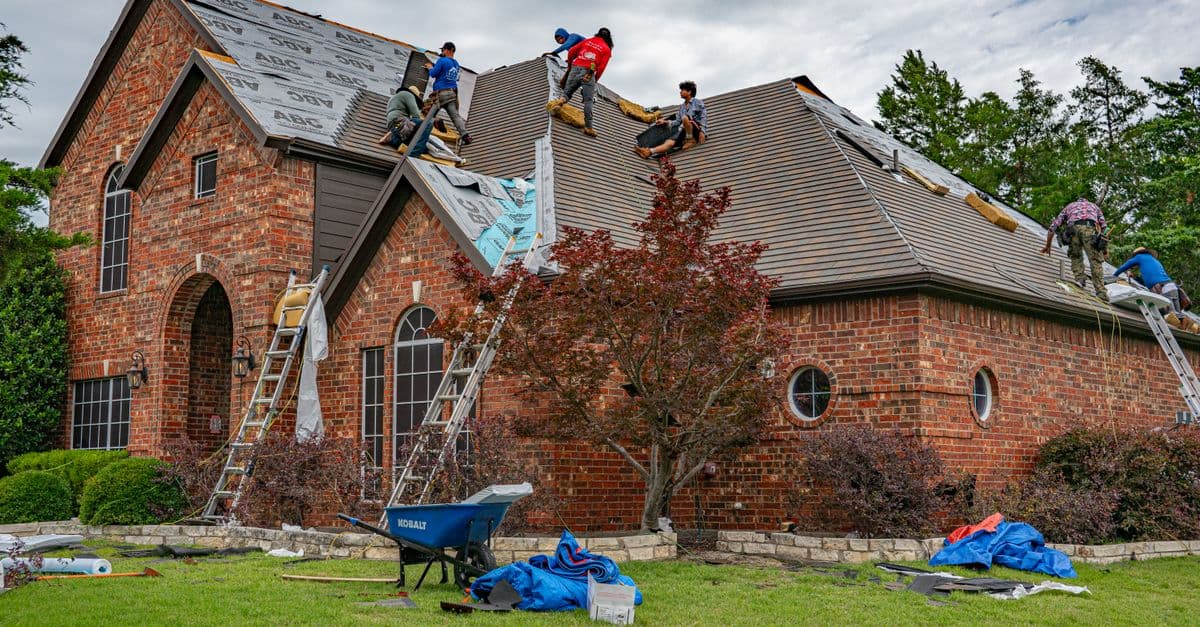
Roofing SEO decides who gets the call when the storm hits. Here is how Australian roofers rank for emergency searches, win insurance repair work, and build a lead engine that runs all year.
When a hailstorm rips through a suburb, hundreds of homeowners grab their phones within the hour and search "roof repair near me" and "emergency roof leak repair". The roofers who rank get weeks of work from a single storm cell. The roofers who do not rank hear about it later, from the ones who did.
That is what makes roofing SEO different from almost every other trade. Demand does not trickle in evenly. It spikes violently around weather events, then settles into a steady baseline of restorations, replacements, and insurance repairs. Your website either captures those spikes or it does not, and there is no ranking your way into a storm after it hits. The work happens before the season.
This guide covers the full playbook: how storm and insurance searches actually behave, the suburb and service pages that capture them, Google Business Profile for service-area roofers, review velocity, before and after photo content, a seasonal content calendar, and how AI search is changing who gets recommended. If you want a head start, book a free website audit and we will show you exactly where you are losing leads. For the full picture of how we work with roofers, see our roofing SEO page.
TL;DR
- Roofing SEO is spike-driven: storm events trigger huge bursts of emergency searches, and only roofers who ranked before the storm capture them.
- Emergency and insurance-related pages ("emergency roof repairs", "storm damage roof repair", "insurance roof repairs") are the highest-value pages on a roofing website.
- Suburb plus service pages beat one generic services page because homeowners search "roof restoration [suburb]", not "roofing company".
- Service-area roofers should hide their home address in Google Business Profile, define honest service areas, and pick the right primary category.
- Review velocity matters as much as review count: a steady weekly flow of reviews outperforms an old pile, especially after storm events.
- Before and after photos are roofing's strongest content asset, and AI engines increasingly recommend roofers by name, so citation signals now matter alongside rankings.
How roofing customers actually search
Roofing demand splits into three very different search behaviours, and each needs its own pages.
Emergency searches. "Emergency roof repair", "roof leak repair near me", "tarp my roof". These happen during or immediately after weather. The searcher is stressed, on a phone, and will call the first credible result. Speed of contact wins, so these pages need a phone number visible without scrolling.
Planned project searches. "Roof restoration [suburb]", "colorbond roof replacement cost", "tile to metal roof conversion". These homeowners research for weeks, compare three or four roofers, and read reviews carefully. Content depth and proof win here.
Insurance-driven searches. "Storm damage roof repair", "insurance roof repairs", "hail damage roof assessment". After a declared weather event, homeowners search for roofers who can inspect damage, document it properly, and work with their insurer. Very few roofing sites have a dedicated page for this, which makes it one of the easiest high-value rankings in the trade.
Most roofing websites have one services page trying to serve all three. That is why they lose to competitors who split them out.
Emergency and storm pages: build them before the season
You cannot publish a page in the middle of a storm and expect it to rank that afternoon. Google needs weeks to trust a page. So the emergency infrastructure gets built in the calm months.
Build a dedicated emergency roof repairs page that covers, in the first 50 words, what you do and how fast you respond. Then: what counts as a roofing emergency, what a homeowner should do while waiting (stay off the roof, move valuables, contain water), what temporary make-safe work involves, and your after-hours availability. Put your phone number in the page's first screen and repeat it after every section.
Then build a separate storm damage page. This is not a duplicate. It targets the post-event searcher: how to spot hail and wind damage from the ground, why damage is not always visible from inside, what a proper inspection documents, and how the repair process runs when an insurer is involved.
The insurance work page
If you want insurance repair work, say so on a dedicated page. Cover how you handle insurance roof repairs: inspection and photo documentation, written scopes of work, dealing with the assessor, and completing repairs to the approved scope. Be factual about your process rather than promising claim outcomes, because the claim decision belongs to the insurer, not you. Homeowners searching "insurance roof repairs [city]" are comparing roofers on exactly one question: who will make this process painless. Answer it.
When the morning after a storm, whose name does AI give?
Suburb plus service pages: the core of seo for roofers
Homeowners search locally. "Roof restoration Ipswich" and "roof repairs Penrith", not "Australian roofing company". The structure that captures this is a matrix of service pages and suburb pages.
Start with dedicated pages for each core service: roof repairs, roof restoration, roof replacement, gutter replacement, leak detection, emergency repairs. Then build suburb pages for the 10 to 20 areas where you actually want more work, prioritising suburbs with roof stock that matches your best jobs, older tile roofs for restorations, hail-prone corridors for repairs.
Each suburb page needs genuinely local substance or it will not rank and will not convert:
- Common roof types and ages in that suburb (post-war tiles, 1990s concrete tile estates, newer colorbond)
- Weather issues that area actually cops
- Which services you most often deliver there
- Real jobs completed nearby, with photos
Thin pages with the suburb name swapped in do nothing. Twenty good pages beat a hundred templated ones. This structure also plays well beyond roofing, and the broader approach is covered in our SEO guide for tradies.
Google Business Profile for service-area roofers
Most roofers work from home or a yard and travel to jobs, which makes them a service-area business in Google's eyes. That changes how you set up your profile.
- Hide your address, set service areas. If customers do not visit your premises, Google's rules say hide the address and define the suburbs and regions you serve. Keep the service area honest; a 500km radius dilutes your relevance everywhere.
- Primary category: Roofing contractor. Add secondary categories only for services you genuinely offer, like gutter cleaning service or skylight contractor.
- List services individually. Roof repairs, restorations, replacements, emergency work, each as its own service with a description.
- Load job photos constantly. Roofing is visual, and profiles with regular fresh photos of real local jobs consistently outperform bare ones.
The general profile playbook is in our Google Business Profile optimisation guide. The roofer-specific point is service-area honesty: Google ranks service-area businesses more confidently when the defined area, the website's suburb pages, and the review locations all tell the same story. Consistent details across directories help too, which our local citations guide covers step by step.
Review velocity: the signal roofers ignore
Everyone knows review count matters. What roofer SEO discussions usually miss is velocity, the rate at which new reviews arrive.
A profile with 80 reviews, all from two years ago, reads as a business that has gone quiet. A profile adding two or three reviews every week reads as busy and current, to both Google and the homeowner scrolling at 10pm. After a storm, velocity matters even more, because a burst of recent reviews mentioning "storm damage" and specific suburbs feeds exactly the relevance signals you want.
Build the system once and let it run:
- Every completed job triggers a review request by SMS within 24 to 48 hours, with a direct Google review link.
- Ask at the moment of satisfaction, when the job is finished and the site is clean, not when the invoice lands.
- Respond to every review within a couple of days, mentioning the suburb and the work naturally ("Glad we could sort the ridge capping in Kellyville").
- Never incentivise or gate reviews. Both breach Google's policies and the risk is your entire profile.
→ 84% of top-rated roofers never get named by AI. A free audit tells you which side you're on. See who AI recommends.
Before and after photos: roofing's unfair content advantage
No trade photographs better than roofing. A moss-covered, faded tile roof next to the same roof restored is an argument no paragraph can match. Most roofers have hundreds of these photos trapped in their phones doing nothing.
Turn them into project pages. Each significant job becomes a short page: suburb, roof type, the problem, what you did, timeframe, and four to eight photos including at least one before and after pair. Name the image files descriptively (roof-restoration-before-after-toowoomba.jpg, not IMG_4402.jpg), write alt text that says what the image shows, and compress images so pages stay fast.
These project pages do three jobs at once. They rank for long-tail searches like "concrete tile roof restoration [suburb]". They give your suburb pages real local proof to link to. And they arm the comparison-stage homeowner with evidence competitors cannot fake. Add drone shots if you have them; homeowners cannot see their own roof, and showing them what you see builds instant trust.
A seasonal content calendar for roofers
Roofing demand follows the weather, so your publishing should run ahead of it. A calendar that works for most of Australia:
| Period | Demand driver | Publish and update |
|---|---|---|
| Late winter to spring | Pre-storm-season prep | Roof inspection checklists, gutter prep, "is your roof storm ready" content |
| Spring to summer | Storm and hail season | Storm damage guides, insurance process content, emergency page updates |
| Summer | Heat, post-storm repairs | Ventilation and insulation content, restoration project posts |
| Autumn | Leaf fall, pre-winter leaks | Gutter cleaning, leak detection, "fix it before winter" content |
| Winter | Leaks show up in rain | Leak diagnosis content, restoration planning for spring |
Northern Australia runs a different rhythm around the wet season, so shift the calendar to match your region. The principle holds everywhere: publish the content 6 to 8 weeks before the demand arrives, because that is how long pages take to settle into rankings.
The AI search angle for roofers
Homeowners have started asking ChatGPT and Google AI Overviews questions like "who does insurance roof repairs near me" and "roof restoration or replacement, which do I need". The AI answers name specific roofers.
Which roofers get named comes down to signals you can influence: review volume and recency, mentions on directories and local sites, content that answers questions directly in the first sentences, and clean structured data on your site, covered in our schema markup glossary entry. The storm and insurance pages described above are prime citation material because they answer the exact questions homeowners put to AI engines.
This discipline is called Answer Engine Optimization, and it is the compounding layer on top of roofing SEO. We explain the service in full on our AEO page, and how the engines pick businesses in how ChatGPT recommends businesses. For roofers the takeaway is simple: the same pages that win Google rankings, built with direct answers and proof, also win AI recommendations. One effort, two channels.
Mistakes that keep roofers invisible
Building the emergency page after the storm. Rankings take weeks. The season is won in the off-season.
One services page for everything. Repairs, restorations, and replacements are different searches with different buyers. Split them.
Chasing "roofing Australia" style keywords. You do not serve Australia. You serve suburbs. Rank there.
Letting reviews go stale. Fifty old reviews lose to thirty recent ones. Velocity beats volume.
A slow, dated website. Emergency searchers bail on slow sites in seconds, and a site that looks abandoned undermines every ranking you earn. If yours is beyond patching, our web design service builds fast trade sites with the SEO structure already in place.
Be the roofing business AI recommends
One report: who AI recommends in your suburbs right now, what they have that you don't, and the fastest path to being the name it gives. Sent within 72 hours.
See who AI recommends →Frequently asked questions
How long does roofing SEO take to work?
Expect early movement in 2 to 3 months and meaningful lead flow in 4 to 6 months for an established site. The seasonal implication matters more than the average: pages need to be live 6 to 8 weeks before storm season to capture it, so start in the off-season, not when the hail arrives.
What are the most valuable keywords for roofers?
Emergency terms ("emergency roof repair [city]"), insurance terms ("storm damage roof repair", "insurance roof repairs"), and suburb-level service terms ("roof restoration [suburb]") deliver the best leads. Broad national terms bring traffic that cannot buy from you. Local and specific beats big and generic every time.
How do roofers get insurance repair leads from Google?
Build a dedicated insurance roof repairs page describing your inspection, documentation, and scope-of-works process, then support it with storm damage content and project pages from past insurance jobs. Homeowners search for roofers who make the insurance process easy, and very few roofing sites answer that search directly.
Should a roofer hide their address on Google Business Profile?
Yes, if customers do not visit your premises. Google treats roofers as service-area businesses, so hide the home or yard address, define the suburbs you genuinely service, and make sure your website's suburb pages match those areas. Consistency between the profile and the site strengthens rankings.
How many reviews does a roofing business need?
Aim for at least 50 Google reviews to be taken seriously, then focus on velocity: a steady flow of new reviews every week. Recent reviews mentioning your suburbs and services outweigh a larger stale collection, and they influence both Google rankings and AI recommendations.
Does AI search matter for roofing companies yet?
Yes. Homeowners already ask ChatGPT and Google AI Overviews for roofer recommendations and repair advice, and the engines cite specific businesses. Roofers with strong reviews, direct-answer content, and consistent local signals get named. Building for AI citations now costs little extra on top of good SEO and positions you ahead of slower competitors.
Storm season rewards the roofers who prepared. If you want to know exactly what your website is missing before the next front rolls through, book a free website audit and we will send back a prioritised fix list. Or see how we work with roofing businesses on our roofing SEO page.